
 EN
EN Turkish
Five Reasons Maritime First Responders Need Thermal Imaging
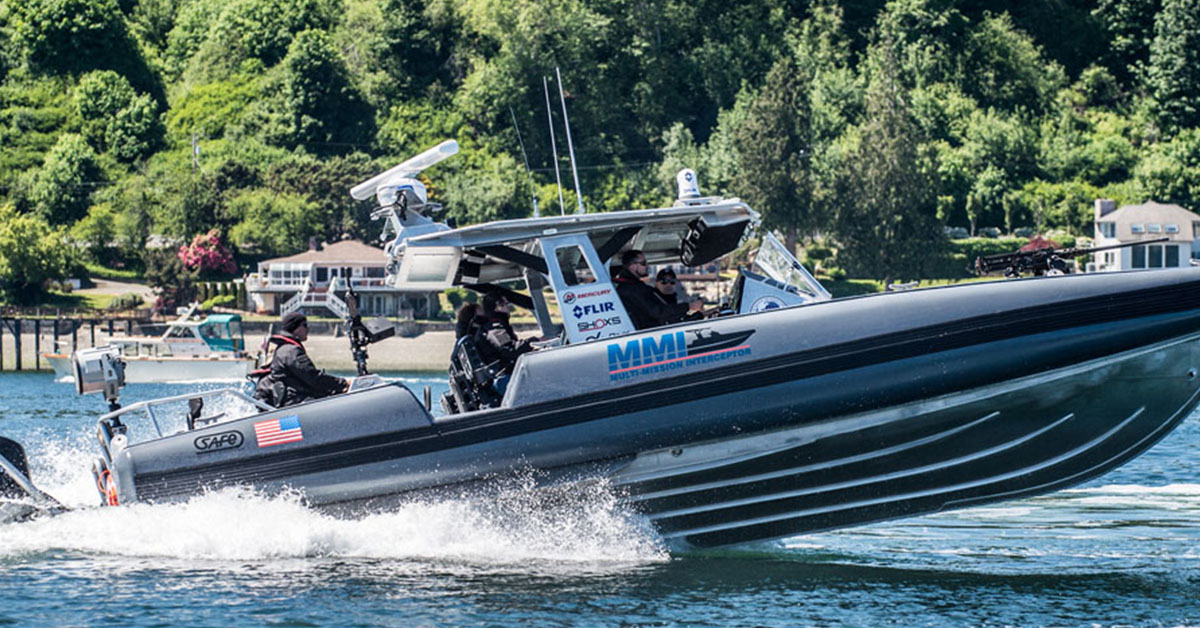
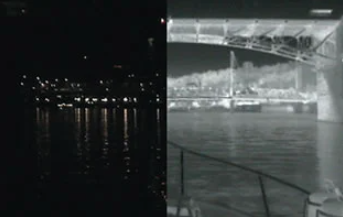
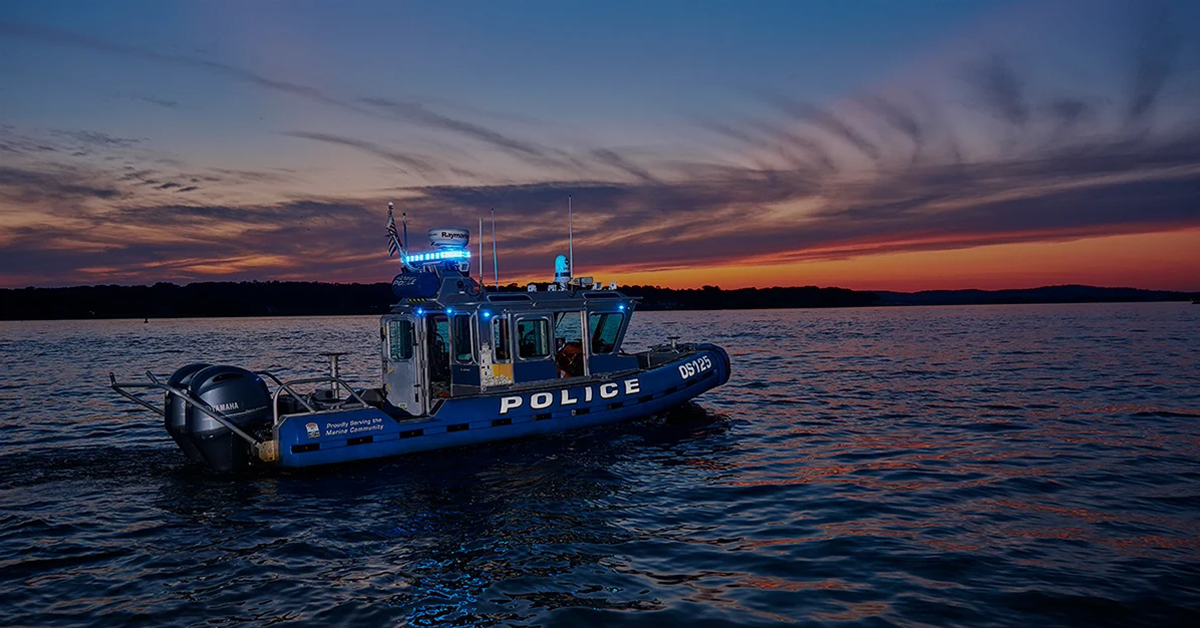
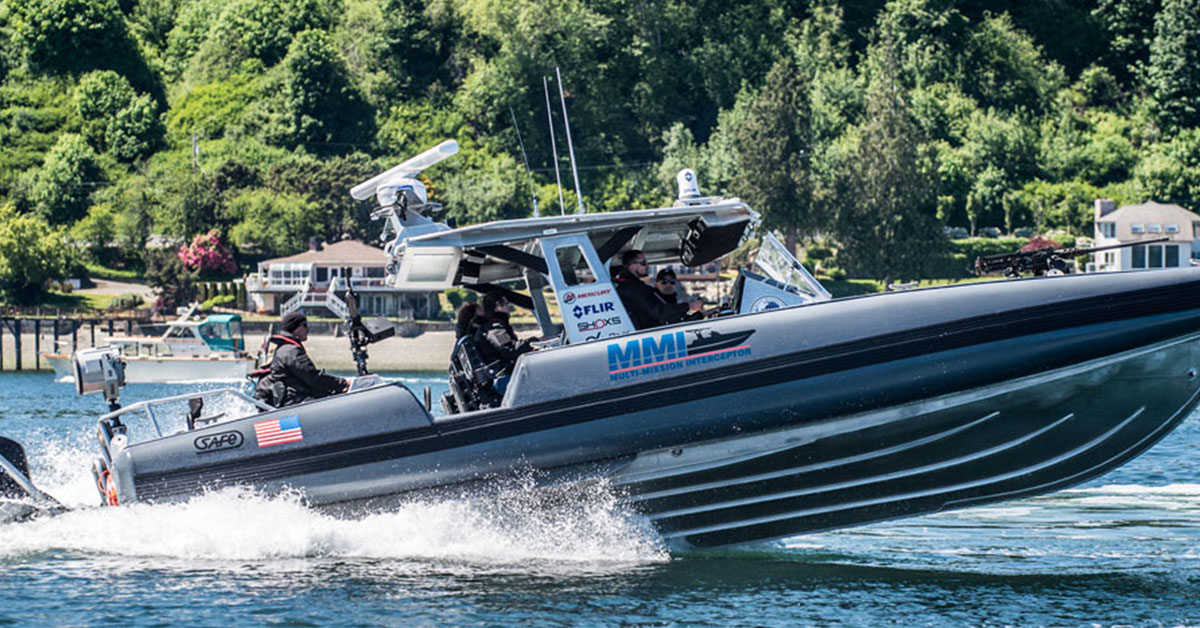
Missions for public safety boats are expanding at a terrific rate beyond their traditional roles in enforcing the law and keeping the peace. With increased responsibility and shrinking budgets, maritime first responders find themselves involved in missions as diverse as law enforcement, search and rescue, SCUBA operations, conducting harbor safety patrols, helping out disabled boaters, lending a hand with homeland missions (e.g., port security), and even responding to HAZMAT emergencies. Day and night, in good weather and bad, maritime public safety vessels such as police boats, fireboats, harbor patrol vessels, and game and fish vessels can utilize the broad range of features provided by thermal imaging cameras to achieve critical mission success.
Limitations of the Human Eye and Visible-Light Cameras
Our eyes see reflected light. Daylight cameras, night-vision devices, and the human eye all work on the same basic principle: Light energy hits something and bounces off it. A detector then receives it and turns it into an image. The ability of a given detector to create that image is directly related to the amount of light available. At night, in fog, or in smoke, we are limited to the light provided by starlight, moonlight and artificial lights. If there isn’t enough, it’s hard to see.
Night vision goggles (NVGs) make those greenish pictures we see in the movies and on TV. NVGs take in the small amount of visible light available, magnify it, and project that image onto a display. Unfortunately, NVGs have severe range limitations in low-light situations. Image contrast is also critical in producing a useable image. If a target has lots of contrast compared to its surroundings, you’ll have a better chance of seeing it with a visible-light camera. If it doesn’t, you won’t see it. That’s how camouflage works.
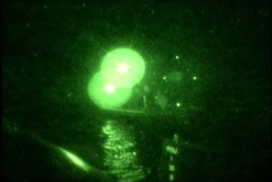
Night Vision (NVG)
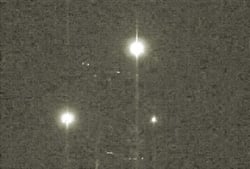
Infrared Illuminated
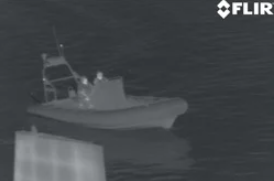
Thermal Image
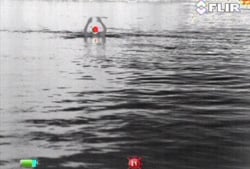
Thermal Image with InstAlert
No Light Needed: Thermal Imaging to the Rescue
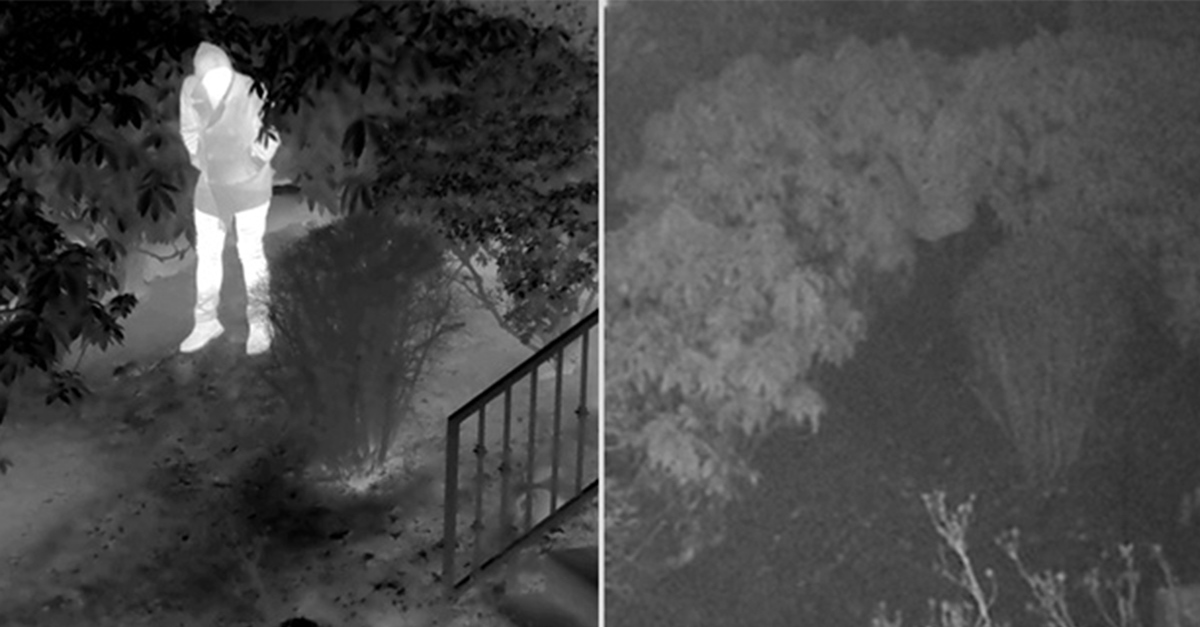
Thermal imaging cameras do not suffer from any of these drawbacks because they see heat or thermal energy. Everything emits thermal energy – even ice cubes – night and day, in good weather and bad. By sensing this thermal energy and displaying it as black and white video, thermal imagers allow you to see things from farther away and with greater contrast than conventional visible-light cameras and night-vision technologies.
Thermal imagers don’t require external lighting, can’t be fooled by camouflage, and can see man-sized targets from farther away than comparable TV cameras. An added bonus to using thermal imaging is that the heat signatures of people, boats, marinas, docks, pilings and all the other things seen by maritime thermal cameras generally have better contrast at night than during the day. As long as there is the tiniest bit of temperature contrast between an object and its background, you can see it.
Complement and Extend Radar Returns
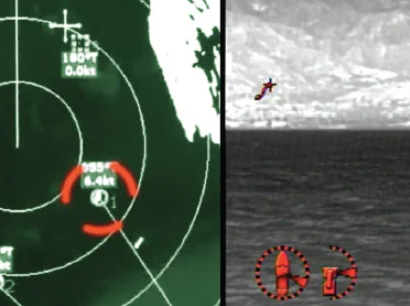
Radar is a vital tool for today’s first responder departments. However, a radar display requires trained interpretation and visualization skills. Thermal imaging, on the other hand, gives an immediate, easily interpreted image of the scene in real time, instantly giving you the information you need to decide on an appropriate course of action. Despite their utility, radar systems can also fail to detect structures, vessels, and floating debris. Thermal imagers can be used to verify radar returns, seeing things that radar might miss, and showing you things that a chart plotter can’t.
Safe 24-Hour Response Capability
In order to maximize their considerable investment in a vessel, first responder agencies want to see that vessel working twenty-four hours a day, seven days a week. Unfortunately, after sunset, or in foul weather, in smoke or fog, her capabilities and mission effectiveness can be severely compromized. At the fraction of the cost of a new vessel, simply by adding a FLIR thermal imager, total on-mission hours and overall effectiveness are radically improved, saving lives and keeping waterways safe in all types of difficult scenarios without endangering either the vessel or her crew.
When operating close to shore at night or in adverse environments, a thermal imager can give the crew important awareness of their surroundings so they can navigate confidently and safely. Uninterrupted, quality information is the key to good outcomes in critical situations: knowing how close the shoreline is, the distance from pilings, docks, floating debris, or boats riding at anchor, the ability to monitor the movements of fellow officers and/or offenders on land—nothing beats being able to “see” what’s going on at all times.
Search and Rescue
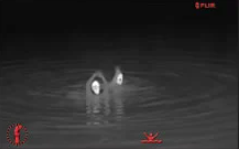
Thermal imagers from FLIR are used all over the world in the maritime search and rescue role. In a man-overboard scenario, the head of a person floating in the water is often the only part of him that is visible. Visible as a white or red ball against a black or dark gray background on the video display, the human head shows up clearly because its thermal heat is greater than that of the water. This is as true at night as it is during the day, creating a true 24-hour response capability.
Managing a rescue at sea is a complex undertaking. On-scene commanders can use thermal imaging to keep accurate track of victims and rescue personnel in the water. This improved situational awareness increases the safety of all involved. Thermal imagers also allow maritime personnel to see what is happening on land without the need of extra lighting, enabling the support of land-based officers while maintaining effective cordon and perimeter actions in and around a crime scene or search area. This allows the maritime and shore-bound teams to work together effectively and safely, as boat crews communicate possible safety issues to units in and around the search area.
Why FLIR
FLIR Systems is the largest commercial infrared company in the world. We have more people and more assets dedicated to helping law enforcement and public safety professionals do their job better and safer than anyone else.
Blog Posts
Thermal Camera Selection
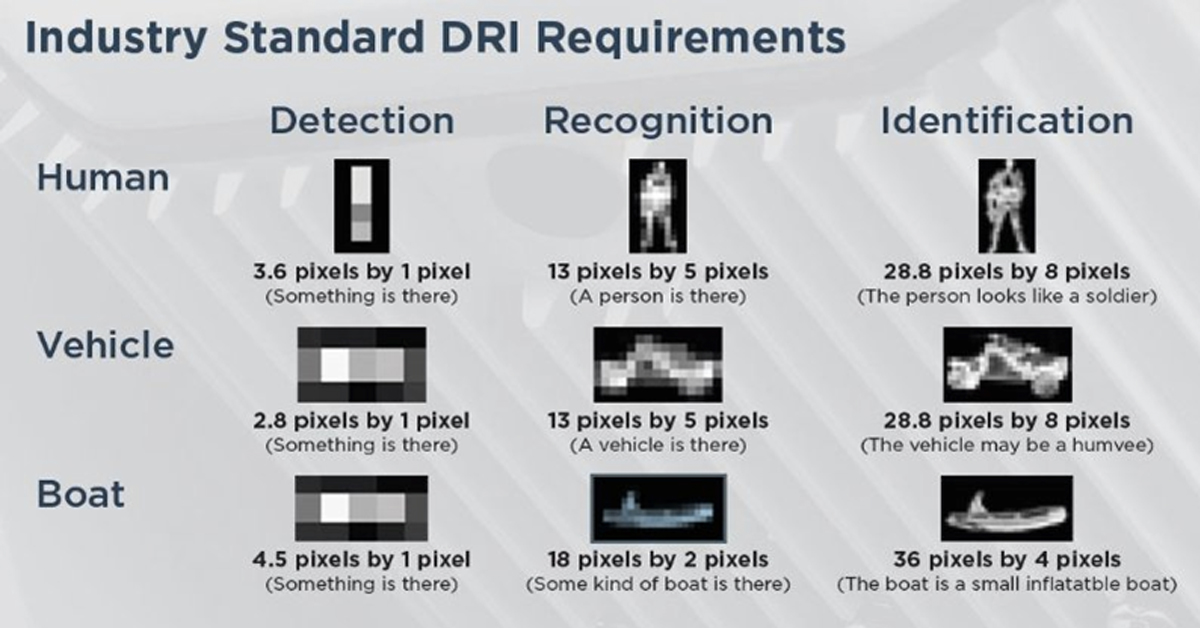
How Far Can I See?
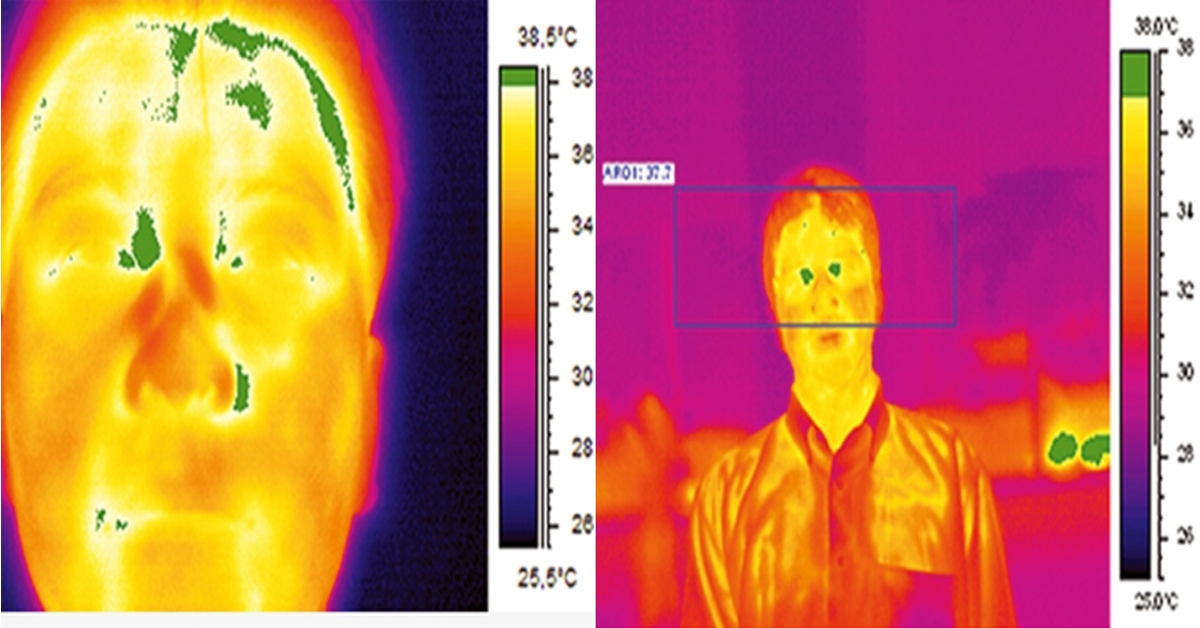
How Should Human Temperature Be Measured?
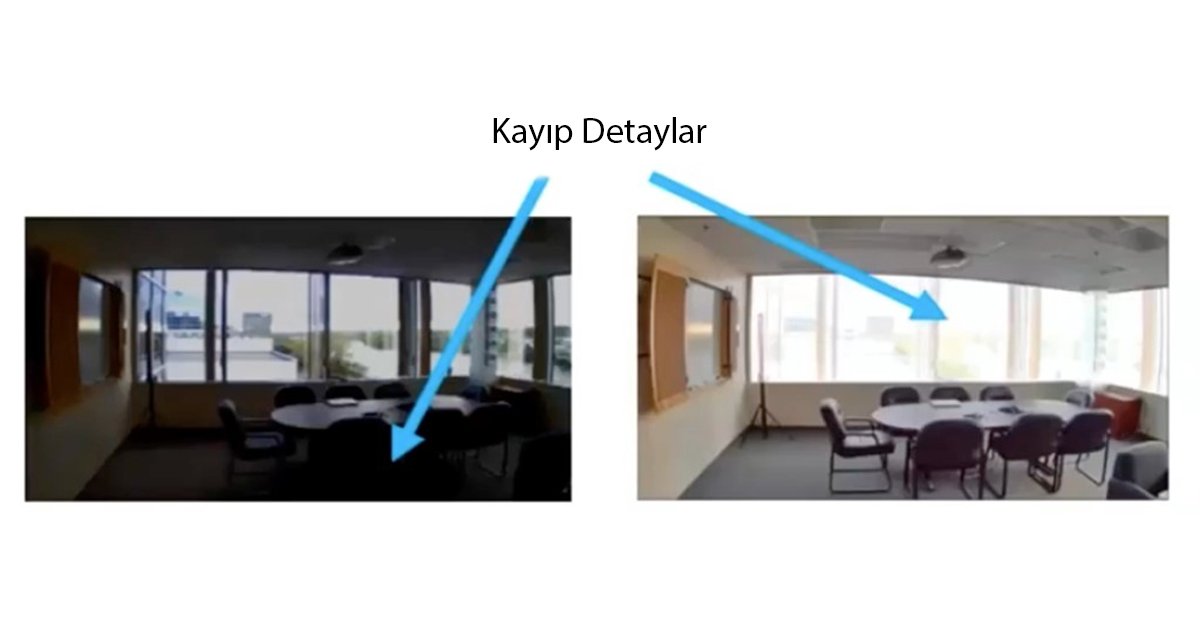
What is Wide Dynamic Range?
MYNOISE AUDIO MIXER REVIEW

WHAT IS A WIRELESS DISTRIBUTION SYSTEM?

POE VS. POE+ VS. POE++: CHOOSING THE RIGHT INDUSTRIAL ETHERNET SWITCH FOR YOU
INDUSTRY-LEADING INDUSTRIAL ETHERNET SWITCHES

UNDERSTANDING WHAT THE INDUSTRIAL INTERNET OF THINGS IS
THE DIFFERENCE BETWEEN A HUB, SWITCH, & ROUTER
5 Benefits of Thermal Imaging Cameras
DIFFERENCE BETWEEN INDUSTRIAL ETHERNET AND REGULAR ETHERNET

INDUSTRIAL NETWORKING EQUIPMENT USED FOR AUTONOMOUS VEHICLES
CYBERSECURITY: PROTECTING INDUSTRIAL CONTROL SYSTEMS
HOW INDUSTRIAL NETWORKING CAN PROVIDE SECURITY FROM DRONES
.webp)
Thermal Cameras Reveal How to Keep Your Home Cool During a Heat Wave
FLıR ONE PRO
.png)
Unmatched Maritime Awareness with Cooled Thermal Imaging
.png)
What Is the Right Handheld Thermal Camera for You?
.png)
Camera Resolution and Range
.png)
Special Applications for Marine Cameras
.png)
What’s The Difference between Thermal Imaging and Night Vision?
.png)
Can Thermal Imaging See Through Fog and Rain?
Which Cx-Series Camera Is Right for You?
.png)
What is MSX®?
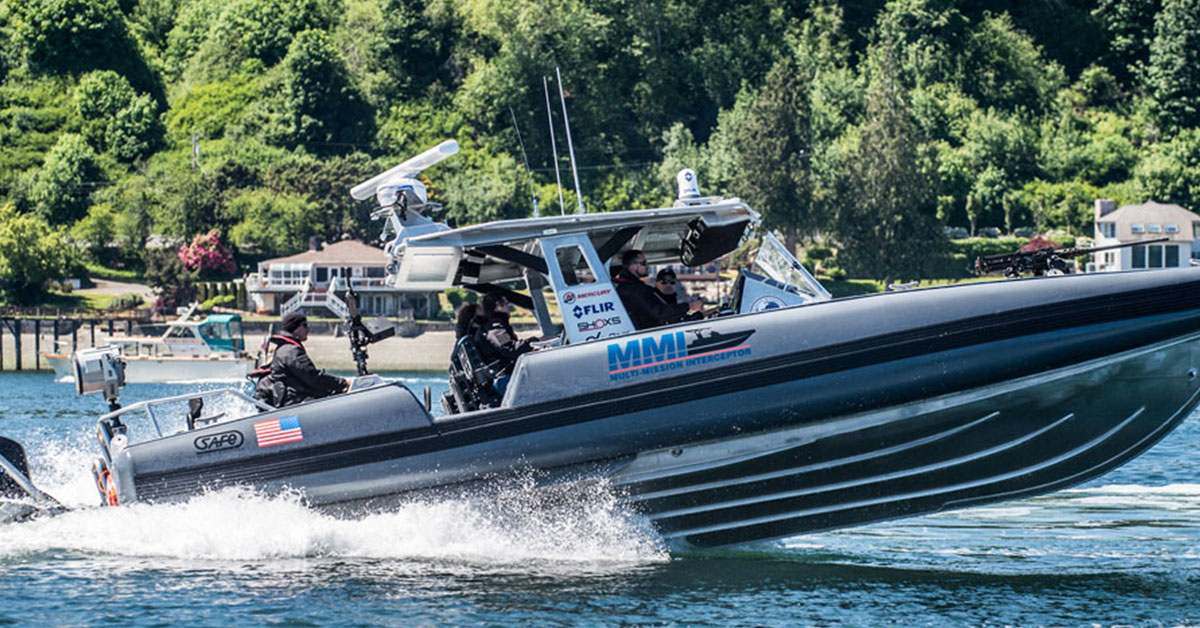
Five Reasons Maritime First Responders Need Thermal Imaging
.png)
3 Distinguishing Features of Superior Thermal Cameras
.png)
Determine Which Visible and Thermal Security Cameras You Need
Bullet vs. PTZ vs. Dome: Which Security Camera Is Right for You?
Interfaces for Machine Vision
Machine Vision Sensor Review
.png)
Teledyne FLIR, the Industry Leader, Launches Boson +, a Long-Wave Infrared Thermal Imager Module with an Accuracy of Less Than 20 mK
.png)
Whitepaper: IP-Based Security Convergence
.png)
3 Technologies Transforming Safe Cities into Smart Cities
.png)
Insights from the Field: Ensuring Workplace Safety Using Thermal Camera Screening for Entry Control
Thermal Night Vision as a Force Multiplier
Can Thermal Imaging See Through Walls? And Other Common Questions
Application Spotlight: Early Fire Detection for Rapid Heat Generation
Protect Personnel and Equipment by Detecting Early Signs of Fire
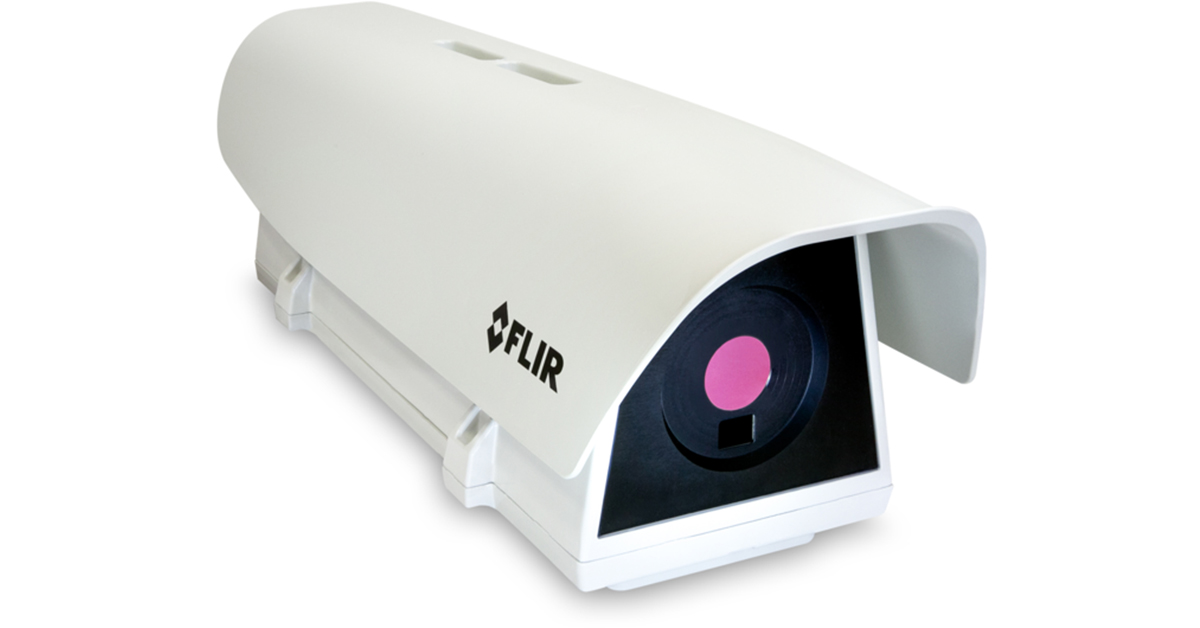
Teledyne FLIR Launches A500f/A700f Cameras for Fire Detection and Condition Monitoring
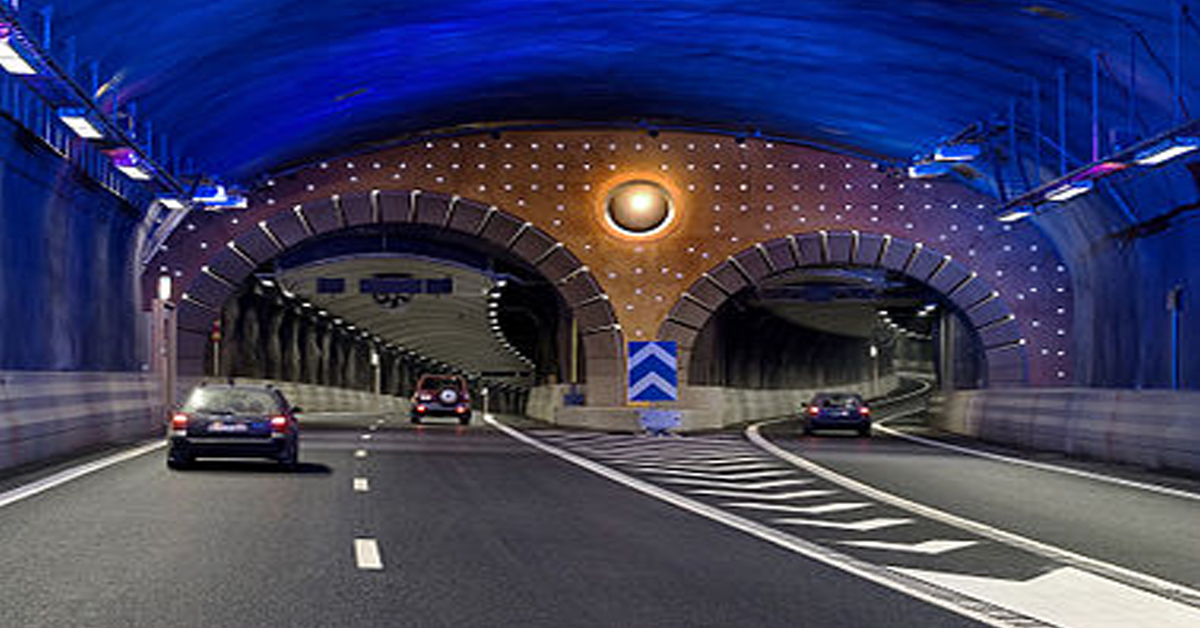
Thermal Imaging Cameras Help Guarantee Fire Safety in Tunnels
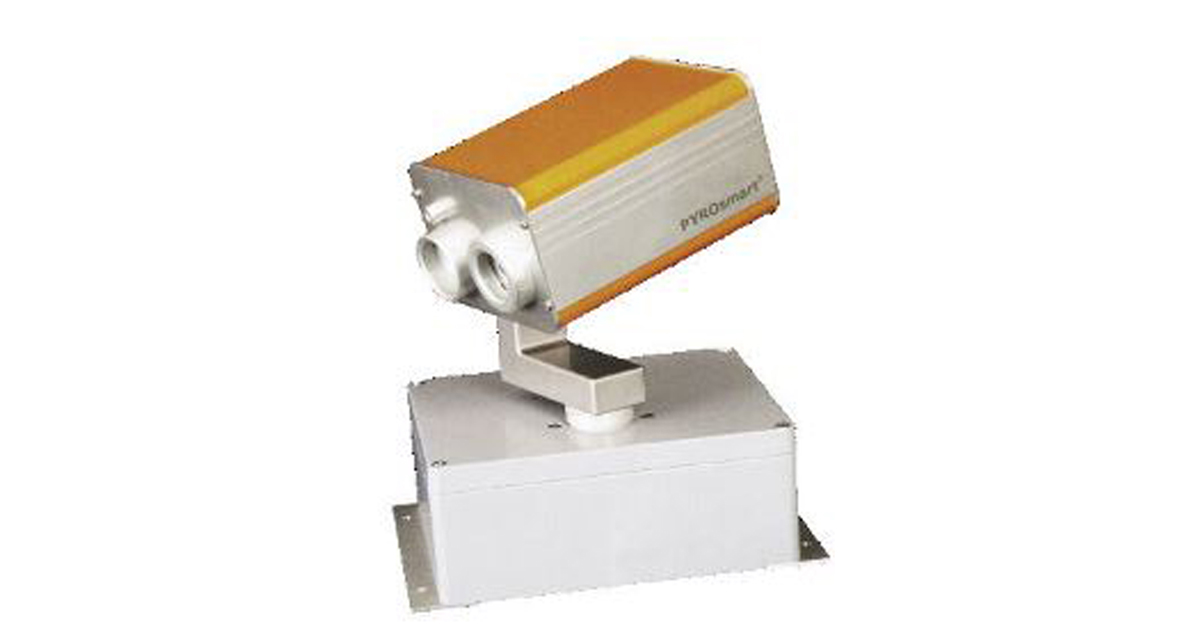
Thermal Imaging Cameras Help to Prevent Fires
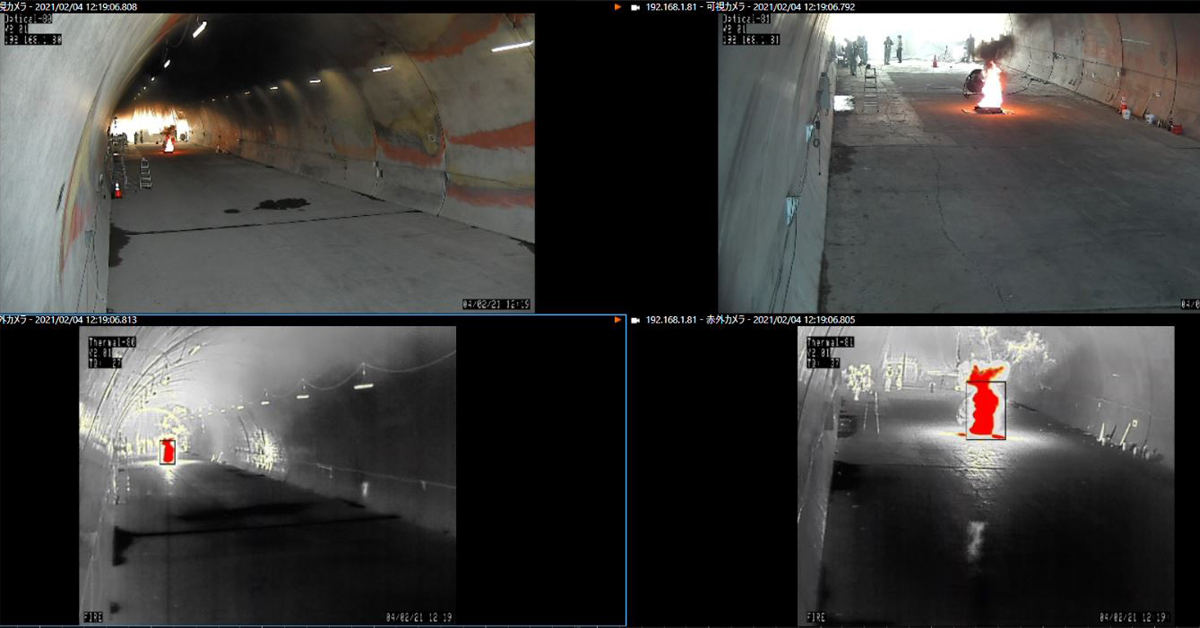
ITS-Series Dual AID Surpasses Standards for Fire Detection Systems in Japan
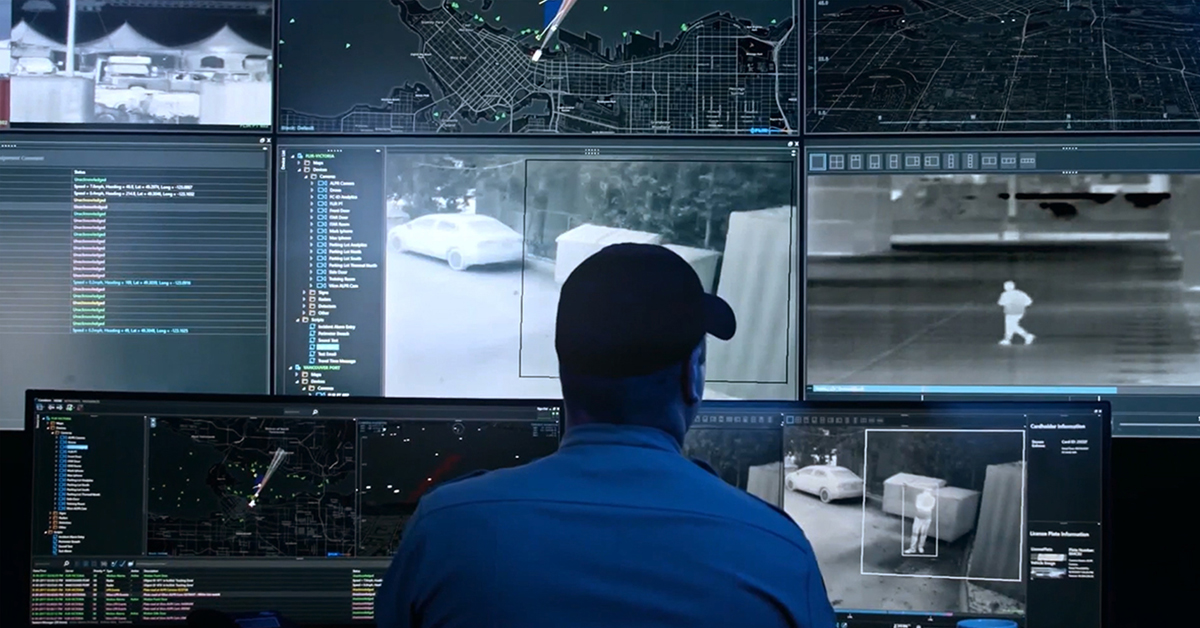
How Layering Multispectral PTZ Cameras and Radars Improve Perimeter Protection
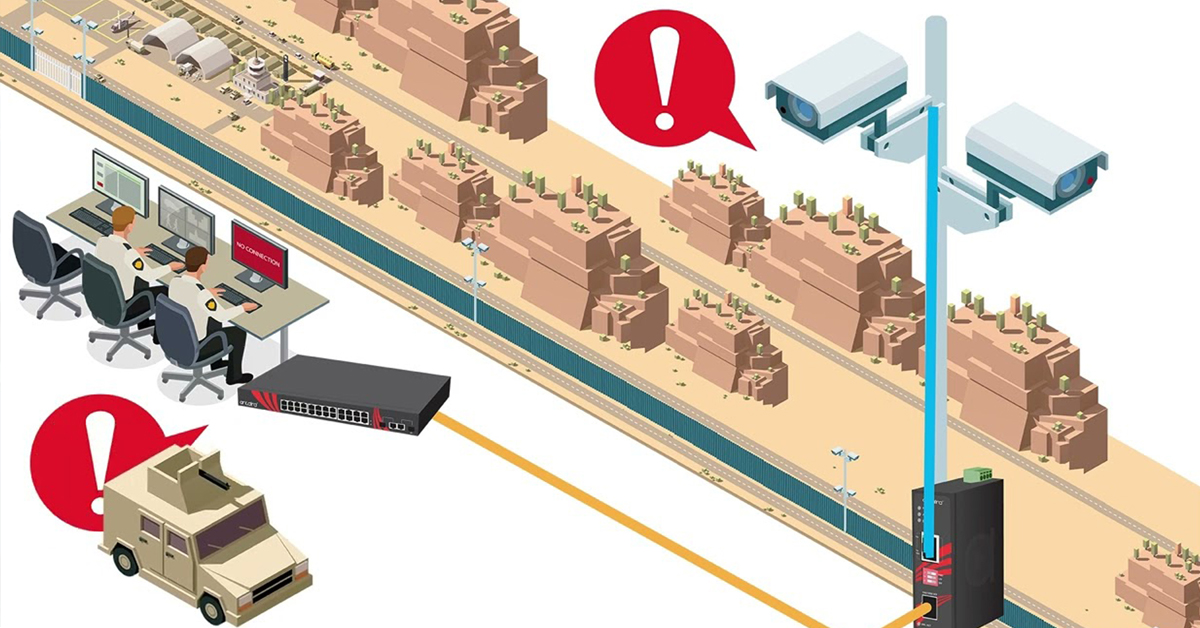
POWER REMOTE RESET TECHNOLOGY - PRRT
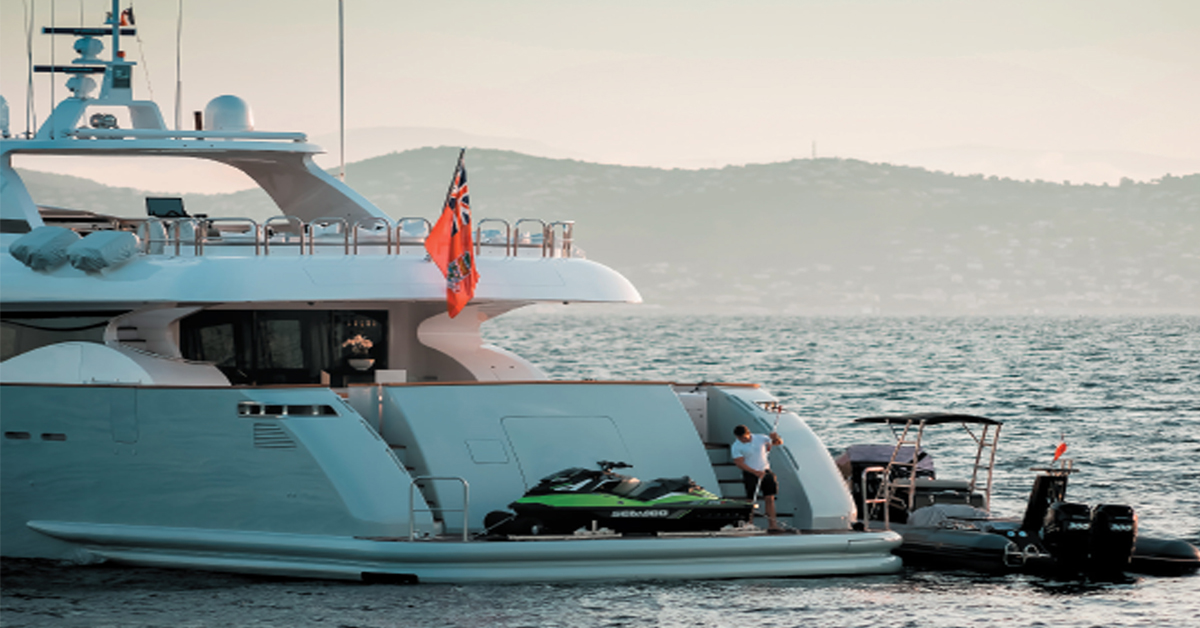
Why Yacht Owners are Adding Thermal Imaging Cameras to Minimise the Risk of Lithium-Ion Battery Fires?
.png)
Intelligent Transportation Systems
Best Practices Guide for Perimeter Security Applications
Protect Pedestrians, Bicyclists and More with Thermal Smart Sensors
White Paper: Application of Ground-Based Security Radar to Perimeter Systems
What is Thermal Leakage and How to Reduce Its Risks
Battery Inspection Using Advanced Thermography
Providing ire Protection for Lithium Battery Storage
The Power of Thermal Imaging
.png)
Why Panel PCs Are Perfect For Industrial Applications?
Teledyne DALSA
.png)
Advantages of Virtual Barrier Video Analytics for Perimeter Security Systems
.png)
.png)
NASA Takes the Teledyne FLIR Boson Thermal Camera Module Out of this World
.png)
Port Security Enhancement: DP World Yarımca's Trust in FLIR Security Solutions for Effective and Safe Port Operations
.png)
The Importance of Thermal Sensitivity (NETD) for Detection Accuracy
.png)
Bosphorus Boat Show 2025: The Meeting Point of the Maritime World
Application Spotlight: Critical Asset Monitoring for Thermal Conditions
.png)
Thermal Imaging for Marine Firefighting
Imaging in Mobile Mapping
.png)
Using Thermal Imaging for Oil Spill Detection
Five Reasons Maritime First Responders Need Thermal Imaging
Case Study: Tackling Compressed Air Leaks in Automotive Parts Manufacturing with Acoustic Imaging
Thermal Night Vision as a Force Multiplier
.png)
Line Scan Contact Image Sensor - AxCIS
Beyond Resolution: What Really Makes a Camera System Work for Mobile Mapping
.png)
Multispectral Marine Cameras for USV Applications
.png)
Stabilizing FLIR Cameras for Smooth Viewing in Rough Waters
 (1).png)
Enhancing Maritime Safety with Video Tracking & Radar Integration
