
 EN
EN Turkish
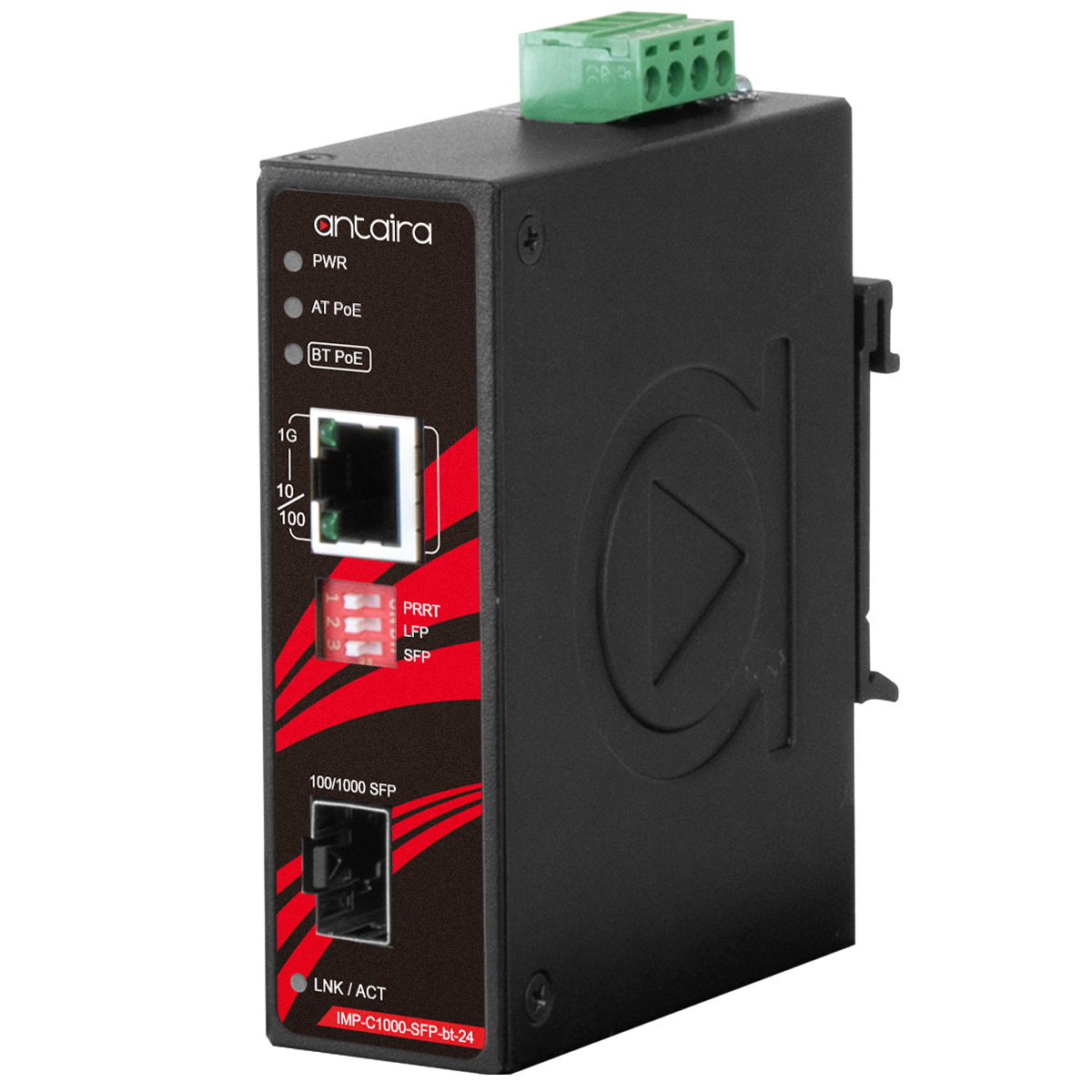
POWER REMOTE RESET TECHNOLOGY - PRRT
What is Antaira's PRRT?
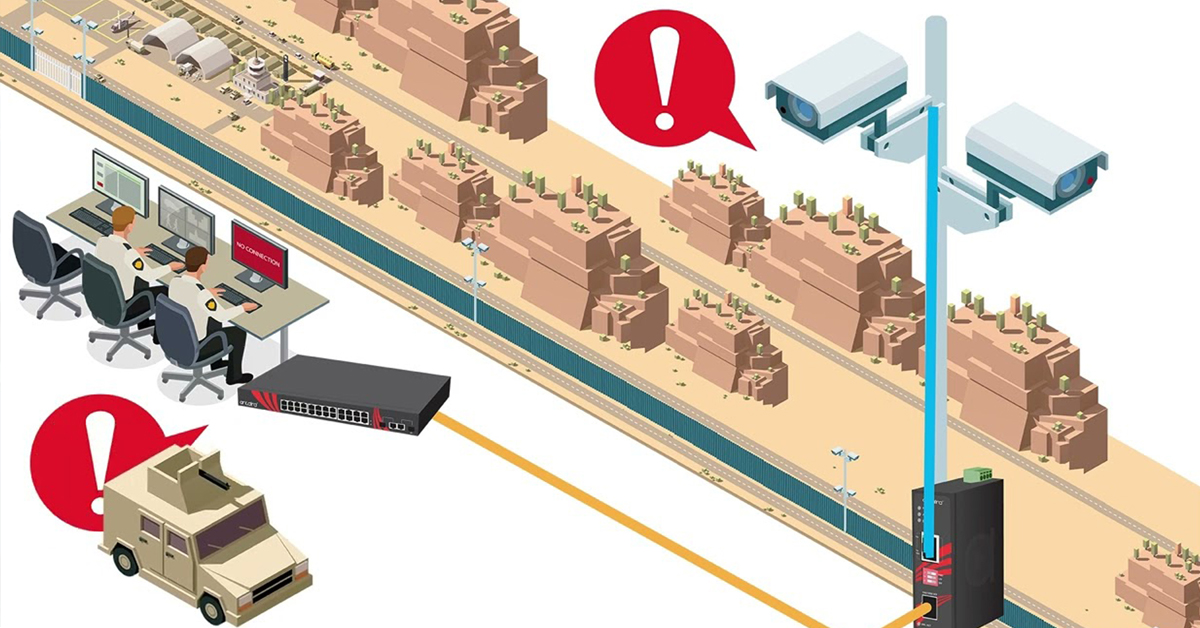
PRRT stands for Power Remote Reset Technology which is a patented technology found in some of Antaira’s bt PoE industrial switches and media converters. The PRRT feature allows you to easily reset a powered device at a remote site without physically visiting the location. This is done by reconnecting the nearby fiber cable that is connected to Antaira’s bt PoE device. Antaira’s PRRT technology will help you save on travel costs and powered device downtime.
PRRT is ideal for long-range fiber applications with a limited budget requiring a remote PoE implementation. In many cases, a remote unmanaged industrial switch or media converter providing PoE power makes it impossible to reset a PoE powered device without actually making a trip to a remote location. Antaira’s patented PRRT is the solution to this problem.
The PRRT function can easily be enabled by flipping a switch on the front of the Antaira bt PoE device. This PRRT technology works by automatically dropping the power to the PoE port at a remote site if the link to the fiber port is lost. This will shut down the remote site’s PoE powered device. Once the link is restored to the fiber port, it will automatically turn the power back on to the PoE port. This then powers up the connected PoE powered device which completes the power cycle of the remote device.
How PRRT Works
- Enable the PRRT function on your Antaira bt PoE media converter or bt switch via the DIP switch on the front panel.
- If the remote Powered Device (PD) becomes unresponsive, disconnect the fiber cable at your nearby switch.
- Wait 3 seconds, then reconnect the fiber cable.
- The switch sends a reset signal to reboot the edge media converter PoE port which power cycles the remote PD.
Antaira's Power Remote Reset Technology Devices
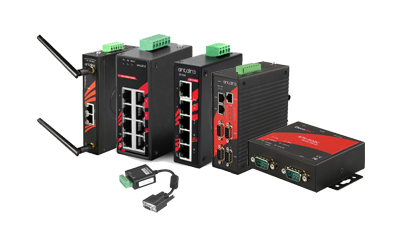
We offer a variety of IEEE 802.3bt PoE solutions with PRRT. Confidently network your application with Antaira's newly patented Powered Device (PD) remote reset technology.
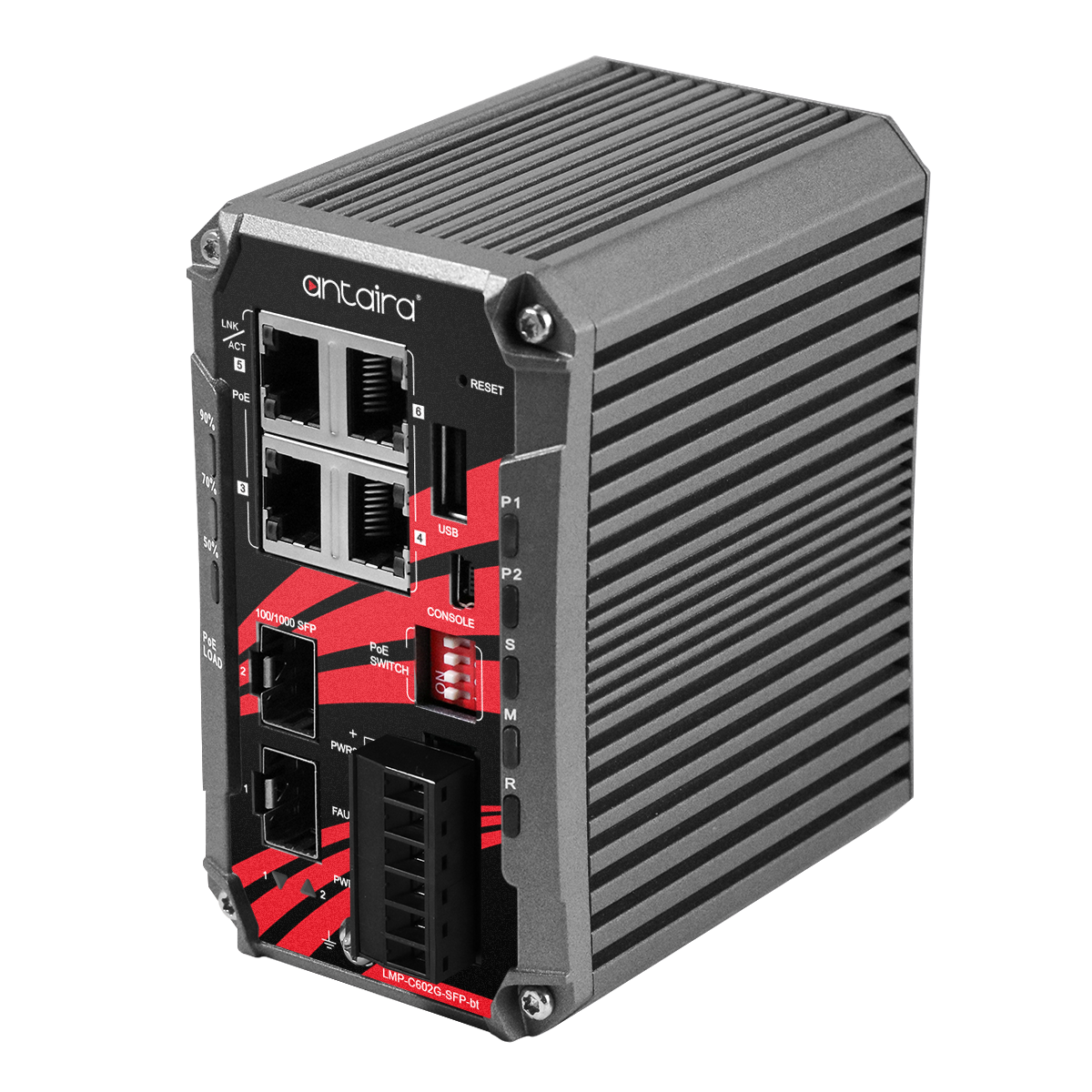
IEEE 802.3BT UNMANAGED POE SWITCHES
Compact Industrial Gigabit IEEE 802.3bt PoE++ Unmanaged Ethernet Switch; 48-55VDC Power Input
- 4-Port 10/100/1000Tx 802.3bt Compliant (90W/Port)
- 1-Port 100/1000 SFP Slot
- Supports Power Inputs Reverse Polarity Protection
- Standard Operating Temperature: -10°C to 65°C
Compact Industrial Gigabit IEEE 802.3bt PoE++ Unmanaged Ethernet Switch; 48-55VDC Power Input
- 4-Port 10/100/1000Tx 802.3bt Compliant (90W/Port)
- 1-Port 100/1000 SFP Slot
- Store-and-Forward Switching Architecture
- Extended Operating Temperature: -40°C to 75°C
Compact Industrial Gigabit IEEE 802.3bt PoE+ Unmanaged Ethernet Switch; 9-55VDC Power Input
- 4-Port 10/100/1000Tx 802.3bt Compliant (90W/Port)
- 1-Port 100/1000 SFP Slot
- Adjustable SFP Speed with DIP-Switch Setting
- Standard Operating Temperature: -10°C to 65°C
Compact Industrial Gigabit IEEE 802.3bt PoE+ Unmanaged Ethernet Switch; 9-55VDC Power Input
- 4-Port 10/100/1000Tx 802.3bt Compliant (90W/Port)
- 1-Port 100/1000 SFP Slot
- Provided Power Booster Technologies for Low Voltage Power Inputs
- Extended Operating Temperature: -40°C to 75°C
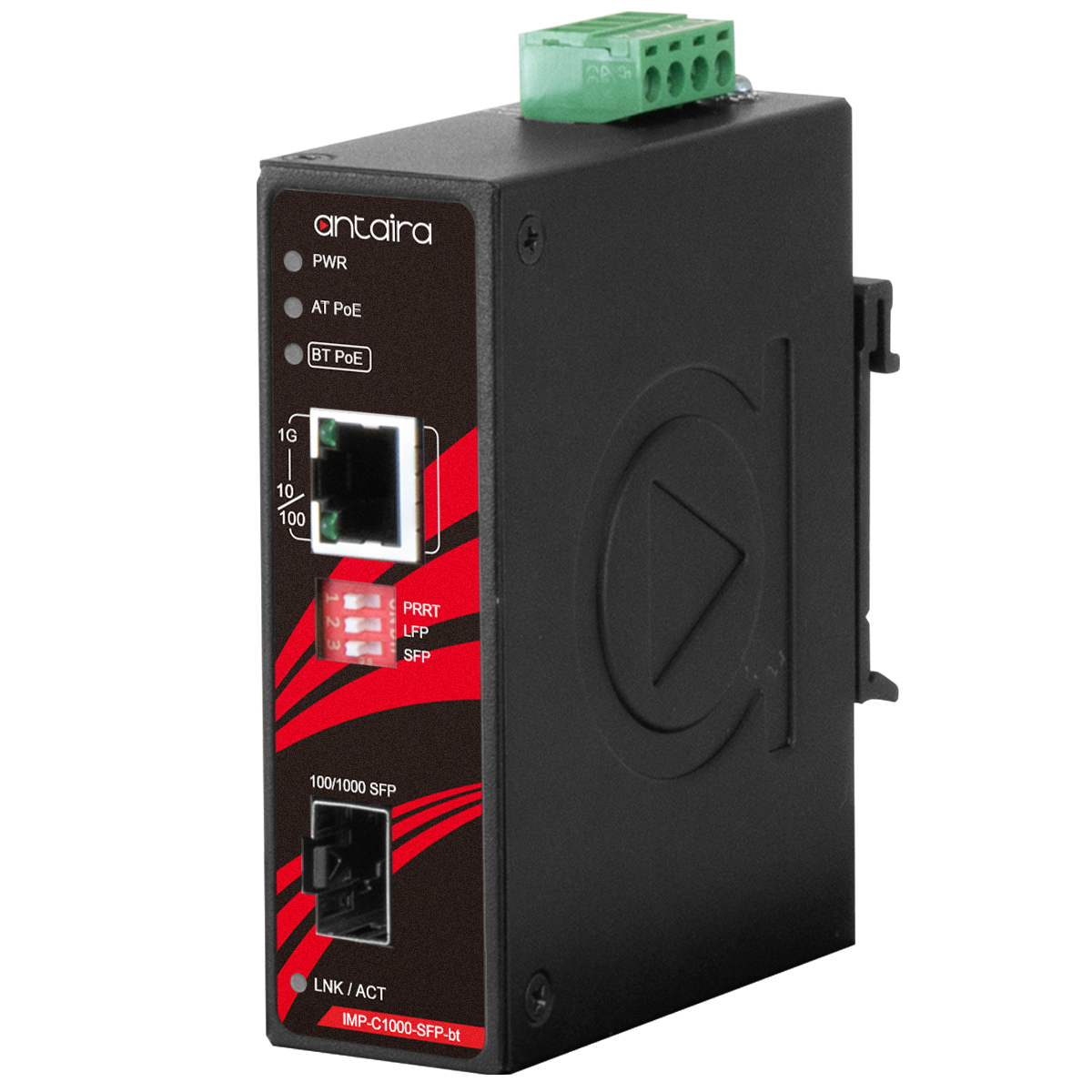
IEEE 802.3BT POE MEDIA CONVERTERS
Compact Industrial Gigabit IEEE 802.3bt Ethernet-to-Fiber Media Converter
- 1-Port 10/100/1000Tx RJ45 with IEEE 802.3bt Compliant PoE
- 1-Port 100/1000Fx SFP Slot
- Power Input: 48~55VDC in 4-Pin Terminal Block
Compact Industrial Gigabit IEEE 802.3bt Ethernet-to-Fiber Media Converter
- 1-Port 10/100/1000Tx RJ45 with IEEE 802.3bt Compliant PoE
- 1-Port 100/1000Fx SFP Slot
- Extended Operating Temperature: -40°C to 75°C
Compact Industrial Gigabit IEEE 802.3bt Ethernet-to-Fiber Media Converter
- 1-Port 10/100/1000Tx RJ45 with IEEE 802.3bt Compliant PoE
- 1-Port 100/1000Fx SFP Slot
- Power Input: 12~55VDC in 4-Pin Terminal Block
Compact Industrial Gigabit IEEE 802.3bt Ethernet-to-Fiber Media Converter
- 1-Port 10/100/1000Tx RJ45 with IEEE 802.3bt Compliant PoE
- 1-Port 100/1000Fx SFP Slot
- Power Input: 12~55VDC in 4-Pin Terminal Block
- Extended Operating Temperature: -40°C to 75°C
Blog Posts
Thermal Camera Selection
How Far Can I See?
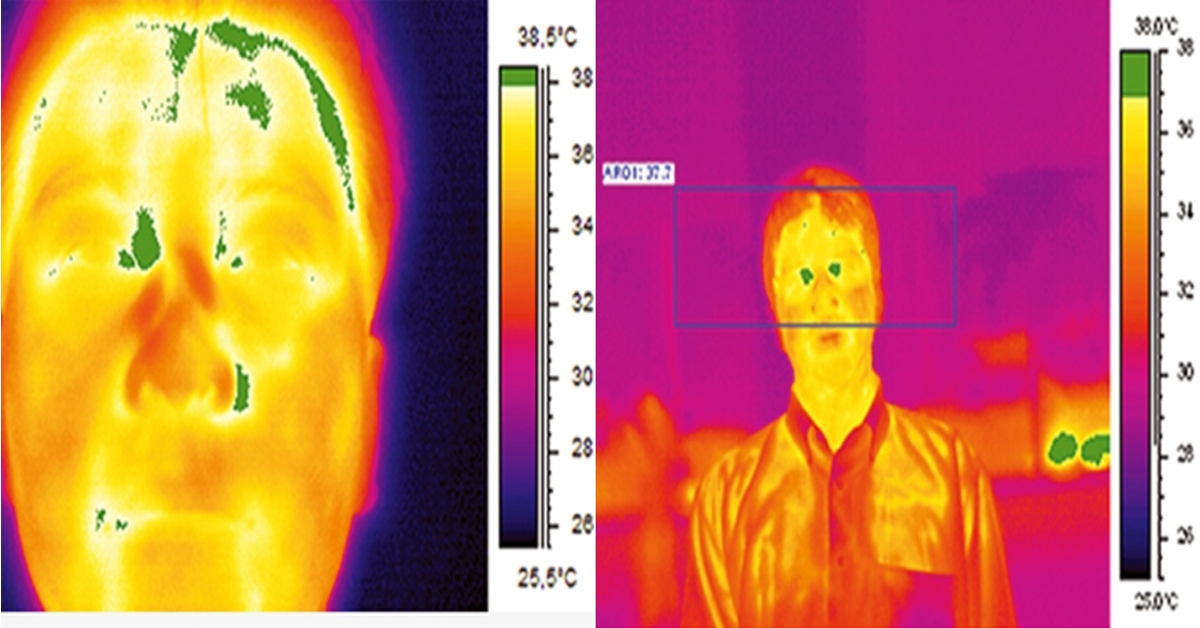
How Should Human Temperature Be Measured?
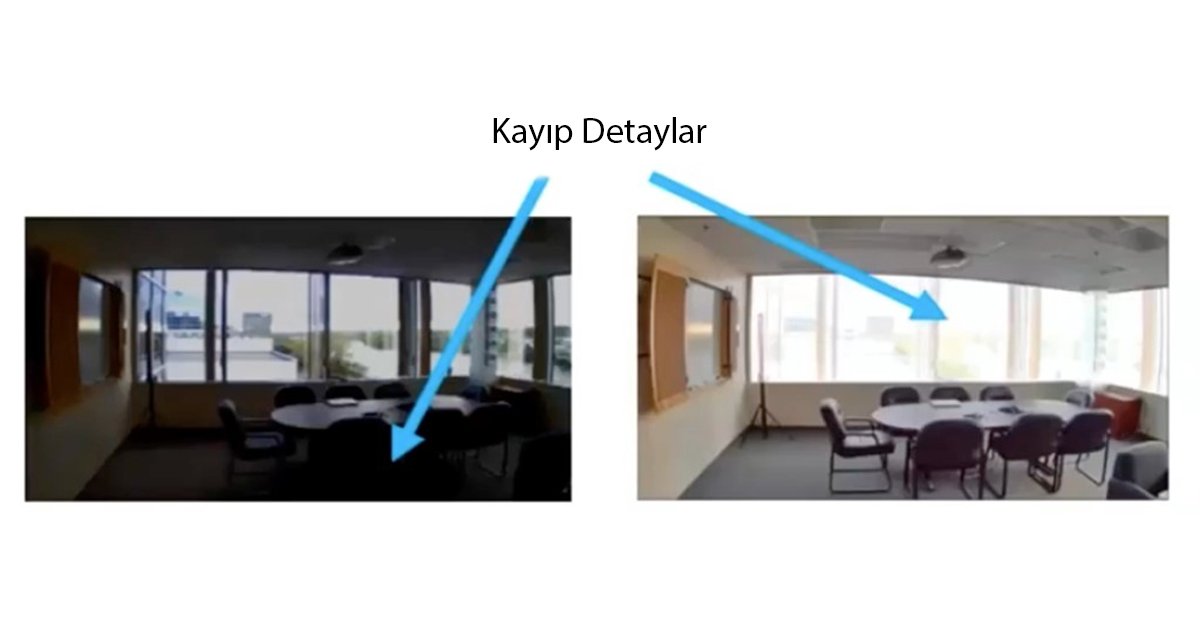
What is Wide Dynamic Range?
MYNOISE AUDIO MIXER REVIEW

WHAT IS A WIRELESS DISTRIBUTION SYSTEM?

POE VS. POE+ VS. POE++: CHOOSING THE RIGHT INDUSTRIAL ETHERNET SWITCH FOR YOU

INDUSTRY-LEADING INDUSTRIAL ETHERNET SWITCHES

UNDERSTANDING WHAT THE INDUSTRIAL INTERNET OF THINGS IS
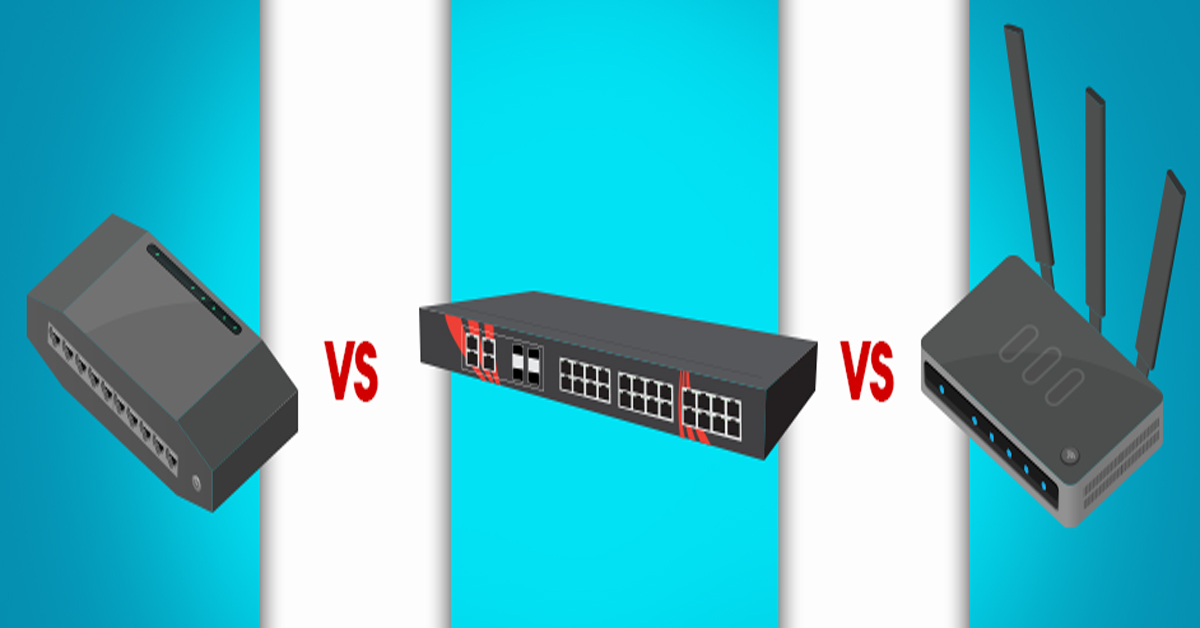
THE DIFFERENCE BETWEEN A HUB, SWITCH, & ROUTER
5 Benefits of Thermal Imaging Cameras

DIFFERENCE BETWEEN INDUSTRIAL ETHERNET AND REGULAR ETHERNET

INDUSTRIAL NETWORKING EQUIPMENT USED FOR AUTONOMOUS VEHICLES

CYBERSECURITY: PROTECTING INDUSTRIAL CONTROL SYSTEMS
HOW INDUSTRIAL NETWORKING CAN PROVIDE SECURITY FROM DRONES
.webp)
Thermal Cameras Reveal How to Keep Your Home Cool During a Heat Wave
FLıR ONE PRO
.png)
Unmatched Maritime Awareness with Cooled Thermal Imaging
.png)
What Is the Right Handheld Thermal Camera for You?
.png)
Camera Resolution and Range
.png)
Special Applications for Marine Cameras
.png)
What’s The Difference between Thermal Imaging and Night Vision?
.png)
Can Thermal Imaging See Through Fog and Rain?
Which Cx-Series Camera Is Right for You?
.png)
What is MSX®?

Five Reasons Maritime First Responders Need Thermal Imaging
.png)
3 Distinguishing Features of Superior Thermal Cameras
.png)
Determine Which Visible and Thermal Security Cameras You Need
Bullet vs. PTZ vs. Dome: Which Security Camera Is Right for You?
Interfaces for Machine Vision
Machine Vision Sensor Review
.png)
Teledyne FLIR, the Industry Leader, Launches Boson +, a Long-Wave Infrared Thermal Imager Module with an Accuracy of Less Than 20 mK
.png)
Whitepaper: IP-Based Security Convergence
.png)
3 Technologies Transforming Safe Cities into Smart Cities
.png)
Insights from the Field: Ensuring Workplace Safety Using Thermal Camera Screening for Entry Control

Thermal Night Vision as a Force Multiplier
Can Thermal Imaging See Through Walls? And Other Common Questions
Application Spotlight: Early Fire Detection for Rapid Heat Generation
Protect Personnel and Equipment by Detecting Early Signs of Fire
Teledyne FLIR Launches A500f/A700f Cameras for Fire Detection and Condition Monitoring

Thermal Imaging Cameras Help Guarantee Fire Safety in Tunnels
Thermal Imaging Cameras Help to Prevent Fires
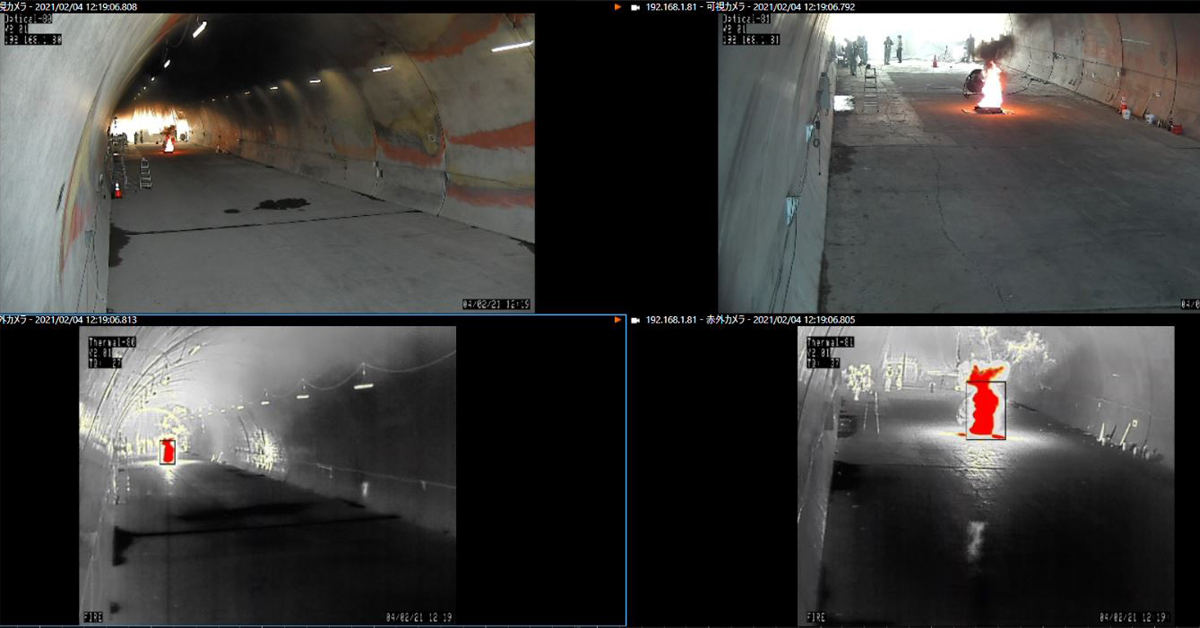
ITS-Series Dual AID Surpasses Standards for Fire Detection Systems in Japan
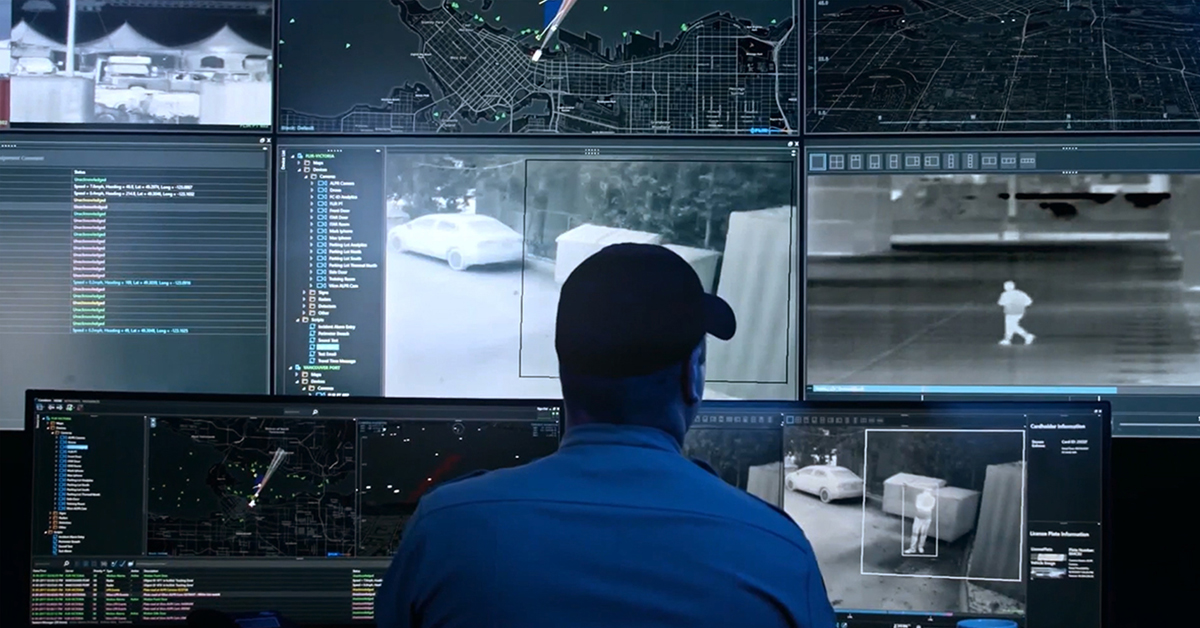
How Layering Multispectral PTZ Cameras and Radars Improve Perimeter Protection
POWER REMOTE RESET TECHNOLOGY - PRRT

Why Yacht Owners are Adding Thermal Imaging Cameras to Minimise the Risk of Lithium-Ion Battery Fires?
.png)
Intelligent Transportation Systems
Best Practices Guide for Perimeter Security Applications

Protect Pedestrians, Bicyclists and More with Thermal Smart Sensors
White Paper: Application of Ground-Based Security Radar to Perimeter Systems
What is Thermal Leakage and How to Reduce Its Risks
Battery Inspection Using Advanced Thermography
Providing ire Protection for Lithium Battery Storage
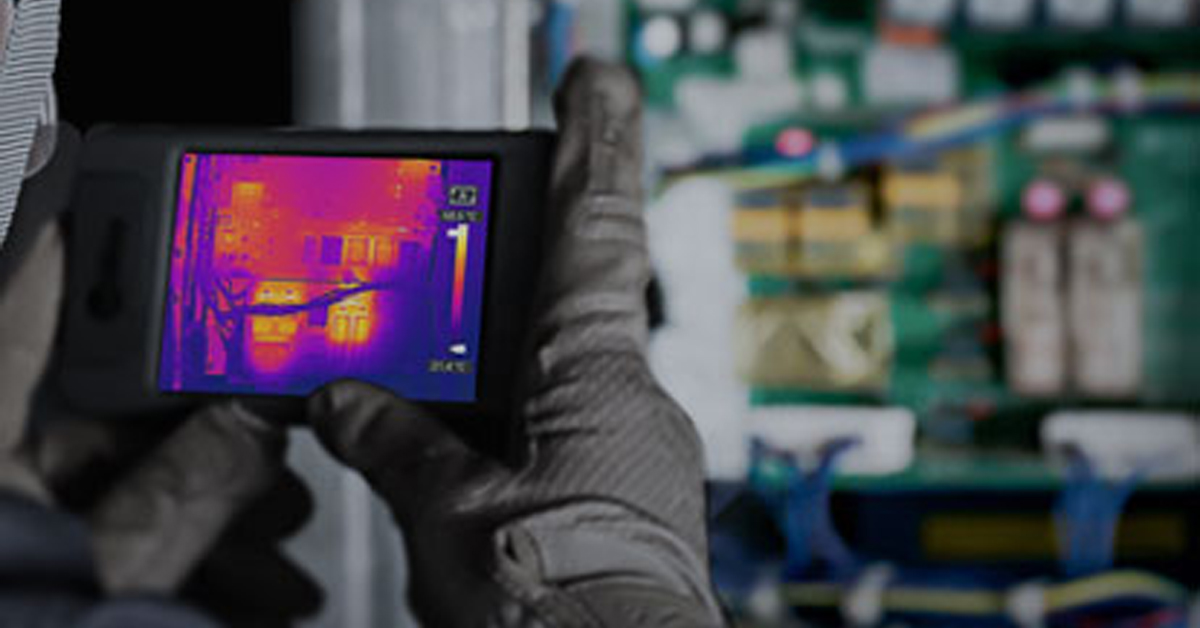
The Power of Thermal Imaging
.png)
Why Panel PCs Are Perfect For Industrial Applications?

Teledyne DALSA
.png)
Advantages of Virtual Barrier Video Analytics for Perimeter Security Systems
.png)
.png)
NASA Takes the Teledyne FLIR Boson Thermal Camera Module Out of this World
.png)
Port Security Enhancement: DP World Yarımca's Trust in FLIR Security Solutions for Effective and Safe Port Operations
.png)
The Importance of Thermal Sensitivity (NETD) for Detection Accuracy
.png)
Bosphorus Boat Show 2025: The Meeting Point of the Maritime World
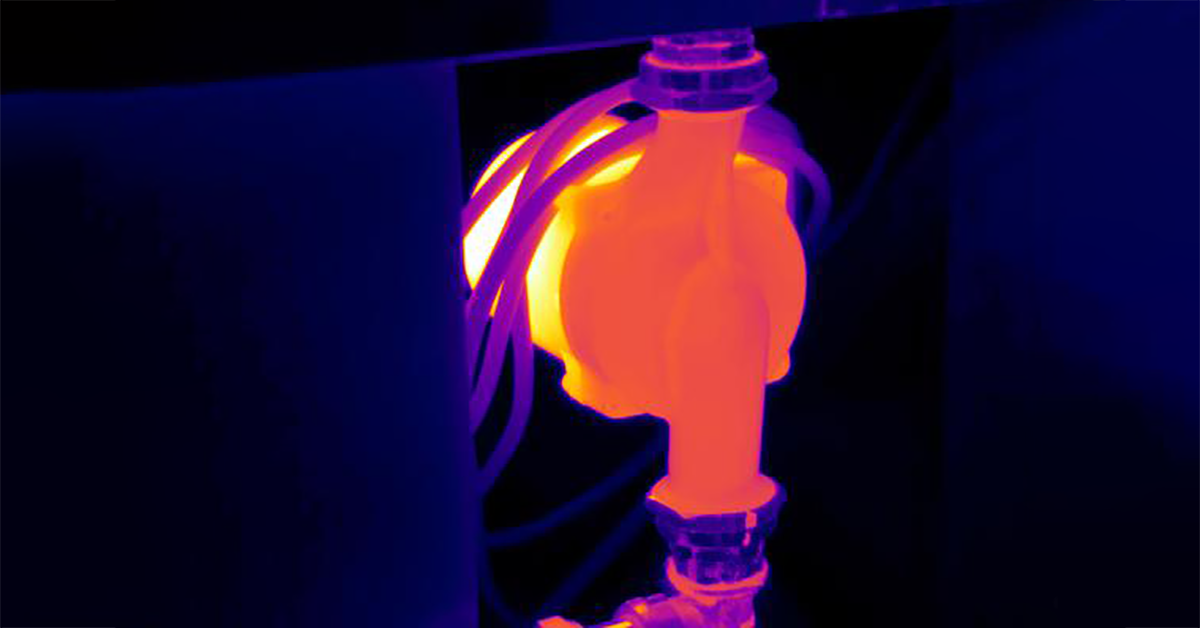
Application Spotlight: Critical Asset Monitoring for Thermal Conditions
.png)
Thermal Imaging for Marine Firefighting
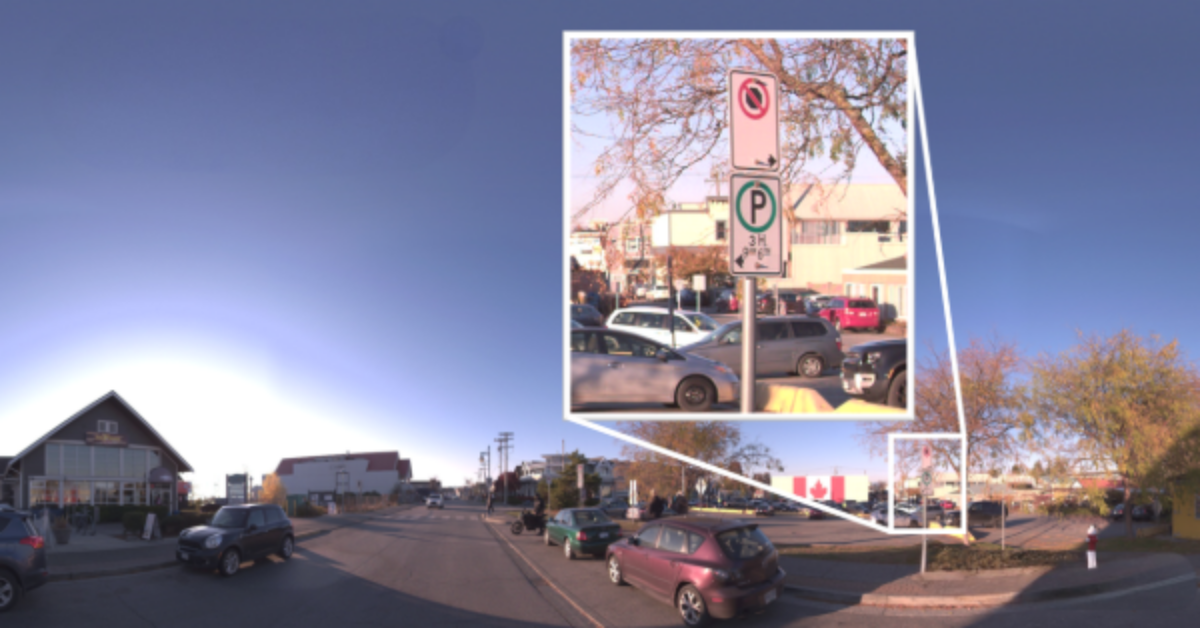
Imaging in Mobile Mapping
.png)
Using Thermal Imaging for Oil Spill Detection

Five Reasons Maritime First Responders Need Thermal Imaging
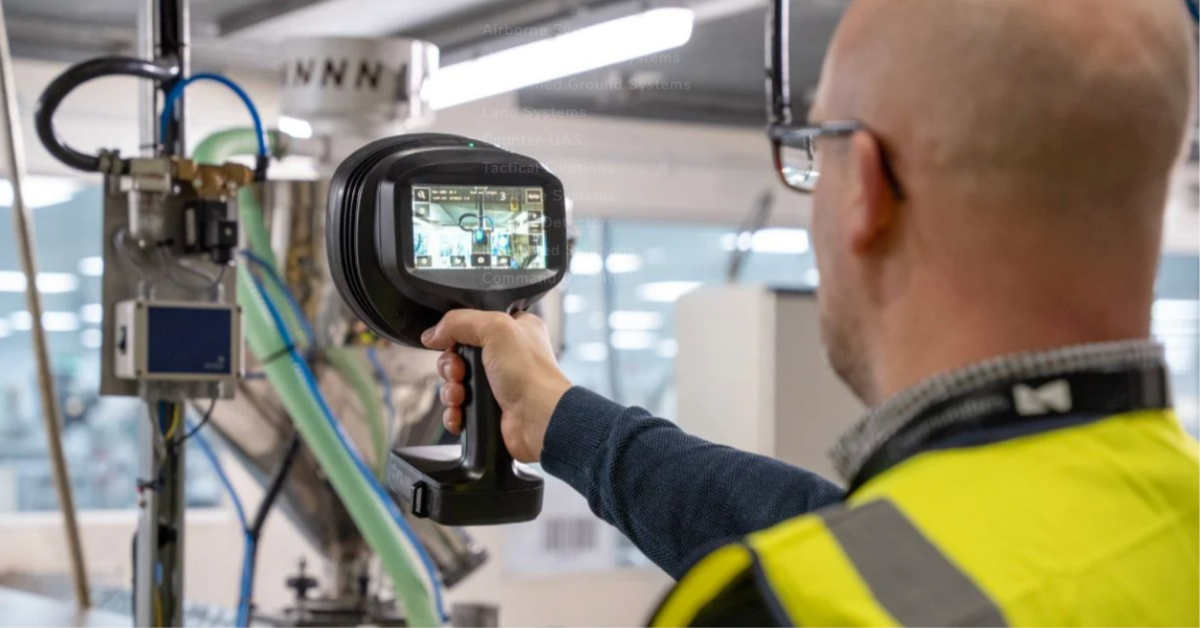
Case Study: Tackling Compressed Air Leaks in Automotive Parts Manufacturing with Acoustic Imaging

Thermal Night Vision as a Force Multiplier
.png)
Line Scan Contact Image Sensor - AxCIS
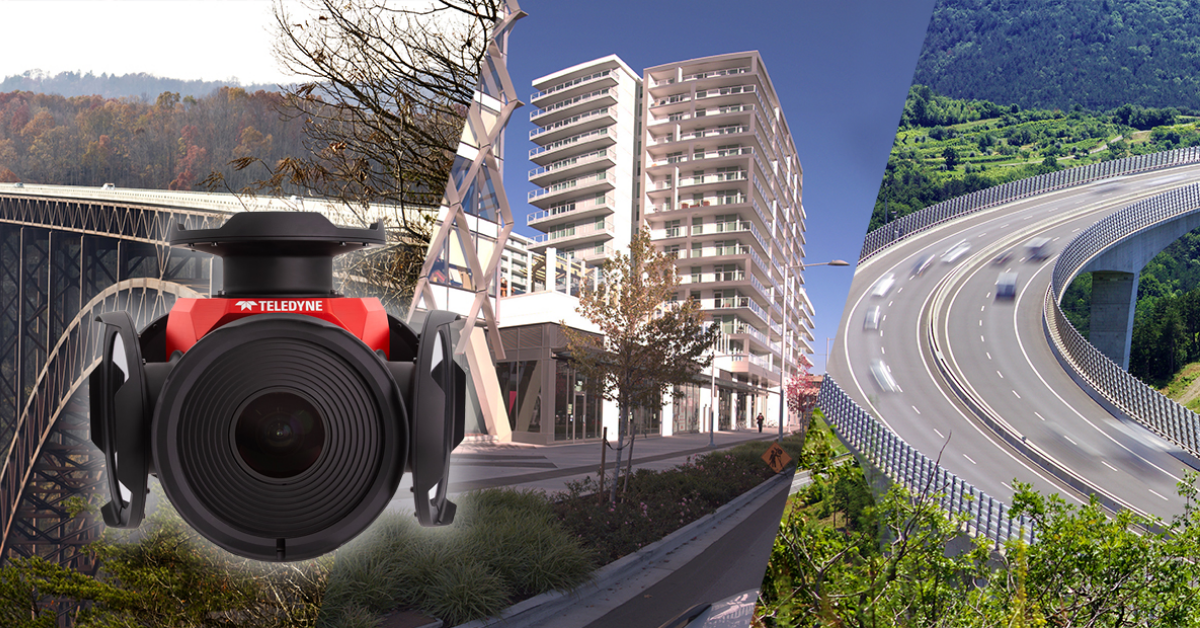
Beyond Resolution: What Really Makes a Camera System Work for Mobile Mapping
.png)
Multispectral Marine Cameras for USV Applications
.png)
Stabilizing FLIR Cameras for Smooth Viewing in Rough Waters
 (1).png)
Enhancing Maritime Safety with Video Tracking & Radar Integration
