
 EN
EN Turkish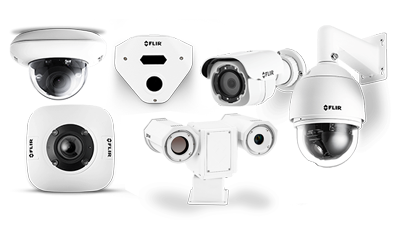
Bullet vs. PTZ vs. Dome: Which Security Camera Is Right for You?
Designing a video security system and trying to choose between a bullet, pan-tilt-zoom (PTZ), or dome camera option? We’ve got you covered. Each has a different monitoring purpose and distinguishable housing. Here are the defining characteristics and benefits to help you make the right decision.
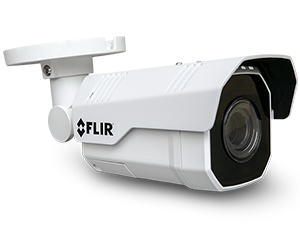
Bullet Cameras earn their name from a distinct, cylindrical shape reminiscent of shell casings. These fixed cameras have longer and wider ranges optimal for exterior monitoring. Often installed outdoors along a perimeter, these cameras are frequently combined with video analytics solutions for intrusion detection. Bullet cameras normally include a sun shield that extends beyond the lens to protect against sun glare and harsh weather. Bullet cameras are also easily visible and act as visual deterrents to dissuade suspects from committing crimes. They can also be easily repositioned by adjusting the mounting bracket or lens.
Pan-Tilt-Zoom cameras have a motorized platform that can move directionally or omnidirectionally and be controlled remotely or by pre-set tours. Often larger in size and featuring high resolutions, these cameras can pan left or right, tilt up or down, and zoom in or out. PTZ cameras are often mounted outdoors on exterior walls or poles with a wide field of view so they can surveil the entire site. They receive targets, handed off from fixed cameras on the perimeter, and follow the target for threat assessment and suspect identification.
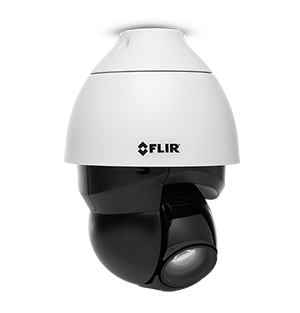
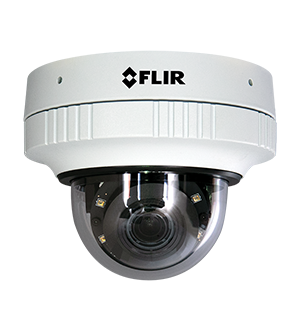
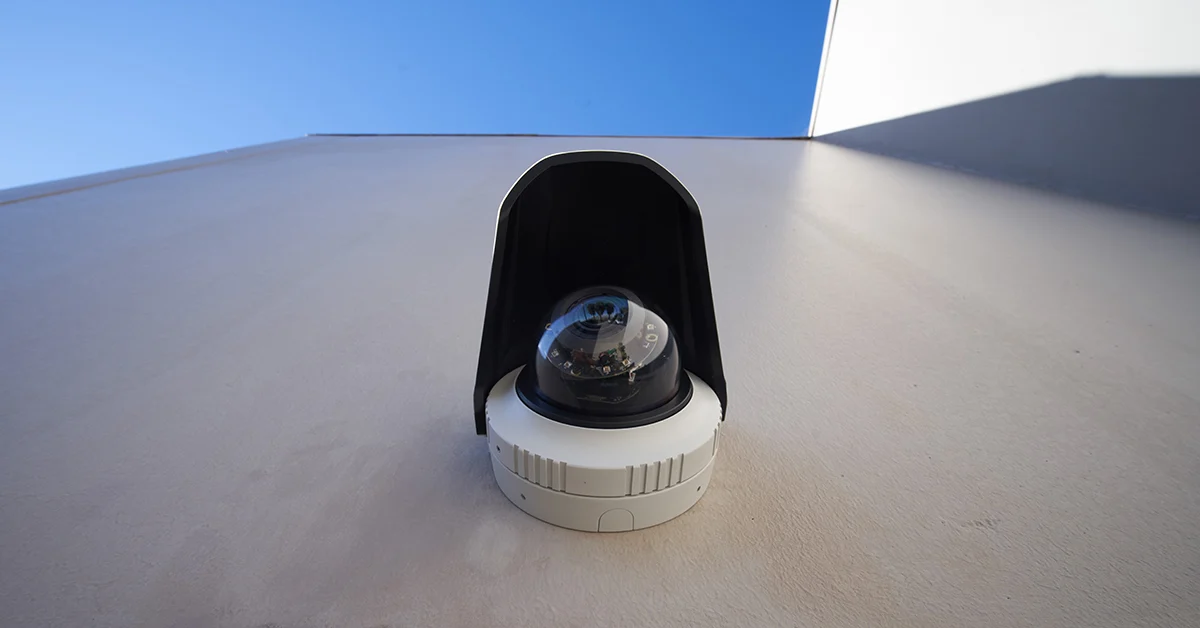
Dome cameras are known for their discrete design that blends into their surroundings. They often feature a metal base and polycarbonate plastic covering the camera to safeguard it from vandalism or tampering. They are typically mounted on ceilings in indoor spaces such as office lobbies or retail store aisles and yield wide-area monitoring. Dome cameras can use a smoked or tinted hue in the dome material to obscure the internal lens and make it indiscernible where the lens is pointing for maximum discretion.
Questions to Consider
To select the best camera for your application, there are several things to consider:
- What does my customer want to achieve? If it’s intrusion detection, consider a bullet camera. Area surveillance can be achieved by dome cameras. Target tracking is best for PTZ cameras. If aesthetics are important, dome cameras may be preferred.
- Which areas need surveillance coverage? Bullet cameras are suited for perimeters and fence lines. Dome cameras are sufficient for outdoor courtyards, entrance gates and large indoor spaces. PTZ cameras are optimal for outdoor corridors, hallways, and large sites requiring 180- or 360 scans of the entire area.
- What range does my customer need to achieve for recognition and detection? Remember, bullet and PTZ cameras have longer ranges than dome cameras. They will be able to classify targets at further distances.
Working Together
While all of these cameras have distinct functionalities for specific environments, there are scenarios when all three are applicable. In mid-size and large outdoor perimeter installations, customers deploying an end-to-end security solution will deploy bullet, PTZ, and dome cameras. Here’s how these cameras work together.
Say a security operator receives an intrusion alert from a bullet camera on the perimeter fence line. Using a sophisticated video management system, the security operator can remotely control a pan-tilt-zoom camera and use it to zoom in on the suspect to follow their movements. While attempting to identify the suspect and determine the threat level, the operator can also monitor key ingress and egress points of the facility through dome camera feeds to ensure nothing is amiss.
Blog Posts
Thermal Camera Selection
How Far Can I See?
How Should Human Temperature Be Measured?
What is Wide Dynamic Range?
MYNOISE AUDIO MIXER REVIEW

WHAT IS A WIRELESS DISTRIBUTION SYSTEM?

POE VS. POE+ VS. POE++: CHOOSING THE RIGHT INDUSTRIAL ETHERNET SWITCH FOR YOU
INDUSTRY-LEADING INDUSTRIAL ETHERNET SWITCHES

UNDERSTANDING WHAT THE INDUSTRIAL INTERNET OF THINGS IS
THE DIFFERENCE BETWEEN A HUB, SWITCH, & ROUTER
5 Benefits of Thermal Imaging Cameras
DIFFERENCE BETWEEN INDUSTRIAL ETHERNET AND REGULAR ETHERNET

INDUSTRIAL NETWORKING EQUIPMENT USED FOR AUTONOMOUS VEHICLES

CYBERSECURITY: PROTECTING INDUSTRIAL CONTROL SYSTEMS
HOW INDUSTRIAL NETWORKING CAN PROVIDE SECURITY FROM DRONES
.webp)
Thermal Cameras Reveal How to Keep Your Home Cool During a Heat Wave
FLıR ONE PRO
.png)
Unmatched Maritime Awareness with Cooled Thermal Imaging
.png)
What Is the Right Handheld Thermal Camera for You?
.png)
Camera Resolution and Range
.png)
Special Applications for Marine Cameras
.png)
What’s The Difference between Thermal Imaging and Night Vision?
.png)
Can Thermal Imaging See Through Fog and Rain?
Which Cx-Series Camera Is Right for You?
.png)
What is MSX®?
Five Reasons Maritime First Responders Need Thermal Imaging
.png)
3 Distinguishing Features of Superior Thermal Cameras
.png)
Determine Which Visible and Thermal Security Cameras You Need
Bullet vs. PTZ vs. Dome: Which Security Camera Is Right for You?
Interfaces for Machine Vision
Machine Vision Sensor Review
.png)
Teledyne FLIR, the Industry Leader, Launches Boson +, a Long-Wave Infrared Thermal Imager Module with an Accuracy of Less Than 20 mK
.png)
Whitepaper: IP-Based Security Convergence
.png)
3 Technologies Transforming Safe Cities into Smart Cities
.png)
Insights from the Field: Ensuring Workplace Safety Using Thermal Camera Screening for Entry Control
Thermal Night Vision as a Force Multiplier
Can Thermal Imaging See Through Walls? And Other Common Questions
Application Spotlight: Early Fire Detection for Rapid Heat Generation
Protect Personnel and Equipment by Detecting Early Signs of Fire
Teledyne FLIR Launches A500f/A700f Cameras for Fire Detection and Condition Monitoring
Thermal Imaging Cameras Help Guarantee Fire Safety in Tunnels
Thermal Imaging Cameras Help to Prevent Fires
ITS-Series Dual AID Surpasses Standards for Fire Detection Systems in Japan
How Layering Multispectral PTZ Cameras and Radars Improve Perimeter Protection
POWER REMOTE RESET TECHNOLOGY - PRRT

Why Yacht Owners are Adding Thermal Imaging Cameras to Minimise the Risk of Lithium-Ion Battery Fires?
.png)
Intelligent Transportation Systems
Best Practices Guide for Perimeter Security Applications
Protect Pedestrians, Bicyclists and More with Thermal Smart Sensors
White Paper: Application of Ground-Based Security Radar to Perimeter Systems
What is Thermal Leakage and How to Reduce Its Risks
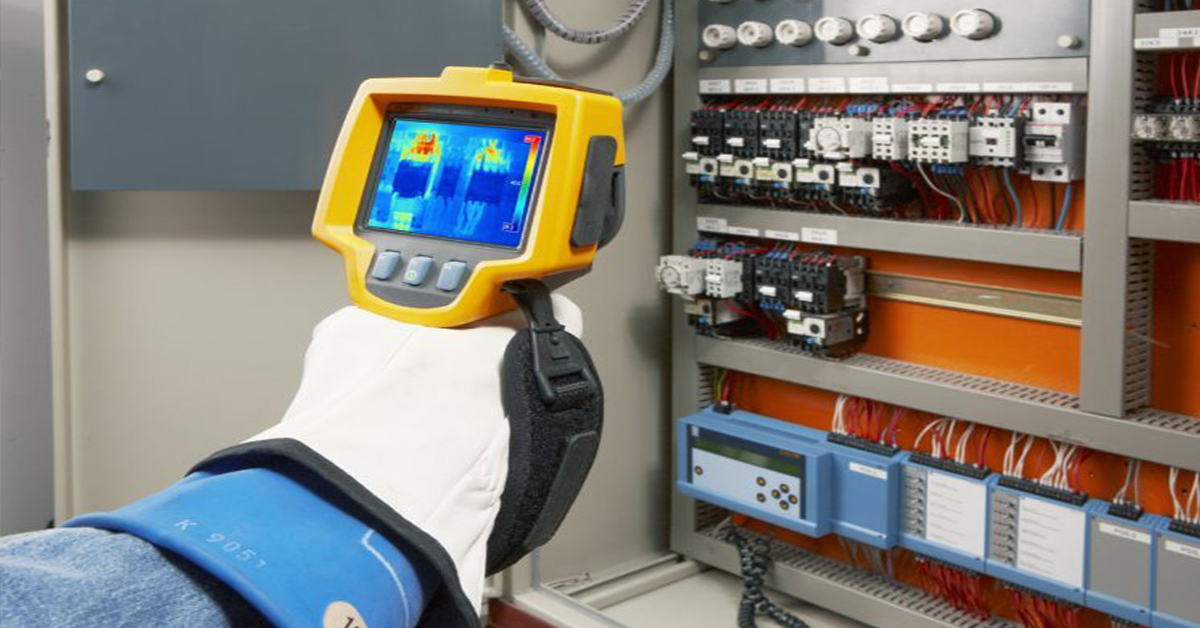
Battery Inspection Using Advanced Thermography
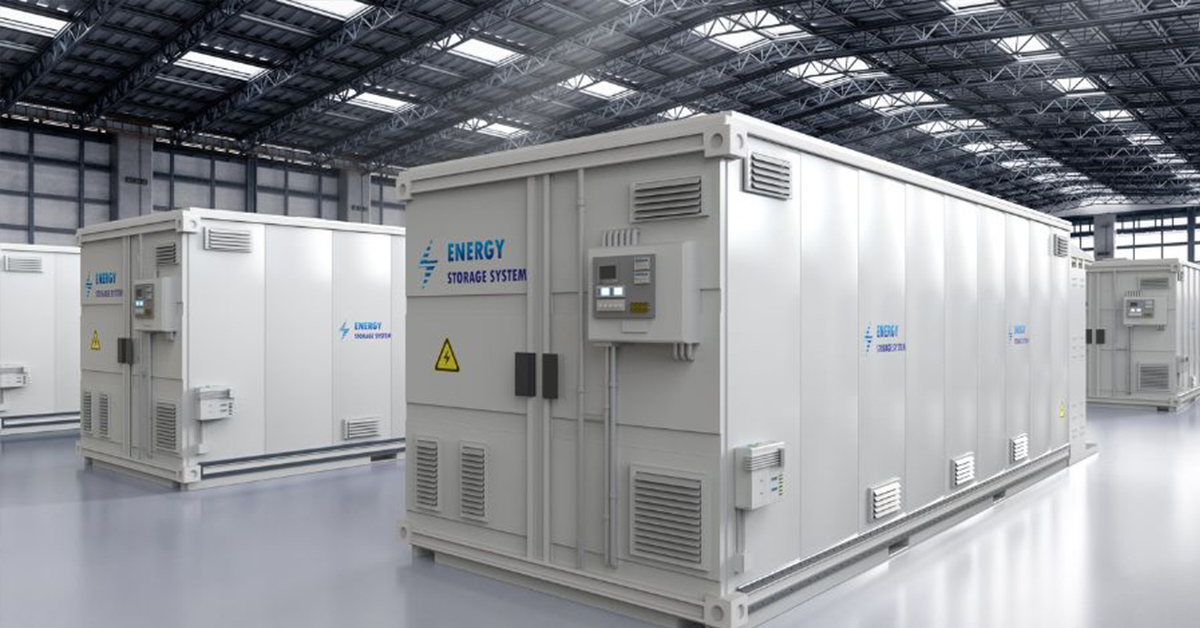
Providing ire Protection for Lithium Battery Storage
The Power of Thermal Imaging
.png)
Why Panel PCs Are Perfect For Industrial Applications?

Teledyne DALSA
.png)
Advantages of Virtual Barrier Video Analytics for Perimeter Security Systems
.png)
.png)
NASA Takes the Teledyne FLIR Boson Thermal Camera Module Out of this World
.png)
Port Security Enhancement: DP World Yarımca's Trust in FLIR Security Solutions for Effective and Safe Port Operations
.png)
The Importance of Thermal Sensitivity (NETD) for Detection Accuracy
.png)
Bosphorus Boat Show 2025: The Meeting Point of the Maritime World
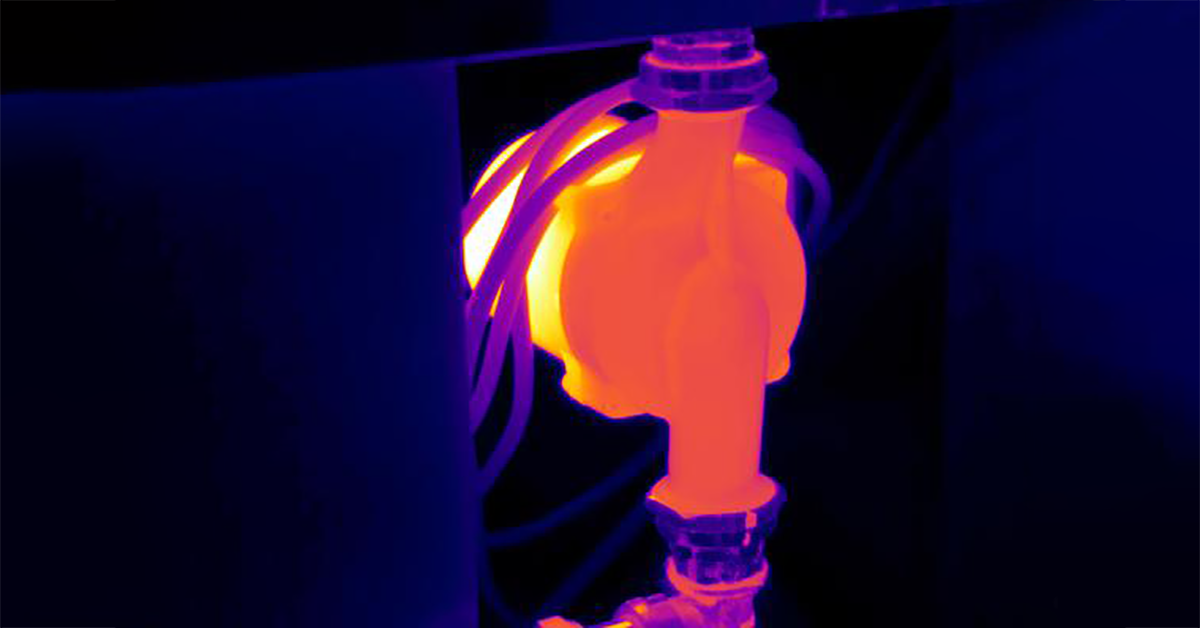
Application Spotlight: Critical Asset Monitoring for Thermal Conditions
.png)
Thermal Imaging for Marine Firefighting
Imaging in Mobile Mapping
.png)
Using Thermal Imaging for Oil Spill Detection
Five Reasons Maritime First Responders Need Thermal Imaging
Case Study: Tackling Compressed Air Leaks in Automotive Parts Manufacturing with Acoustic Imaging
Thermal Night Vision as a Force Multiplier
.png)
Line Scan Contact Image Sensor - AxCIS
Beyond Resolution: What Really Makes a Camera System Work for Mobile Mapping
.png)
Multispectral Marine Cameras for USV Applications
.png)
Stabilizing FLIR Cameras for Smooth Viewing in Rough Waters
 (1).png)
Enhancing Maritime Safety with Video Tracking & Radar Integration
